
If you're looking to boost your SEO strategy in 2026, keyword clustering is something you absolutely cannot ignore. At Seven Koncepts, we understand how critical it is to organize your keywords efficiently and effectively. The process of grouping similar keywords into clusters allows you to target various aspects of user intent, ensuring your content ranks well on search engines. Today, we’ll walk you through the complete workflow of keyword clustering, from understanding its importance to executing it seamlessly.
So, why should keyword clustering be at the forefront of your SEO efforts in 2026? In a nutshell, it simplifies keyword targeting, improves content structure, and enhances the overall user experience. As SEO experts, we at Seven Koncepts recommend utilizing this technique to improve semantic SEO, create content that addresses multiple user intents, and ultimately drive more qualified traffic to your website.
What Is Keyword Clustering?
Before we dive deep into the workflow, let’s break down the concept of keyword clustering. At its core, keyword clustering is the process of grouping similar keywords based on intent, relevance, or search terms. By doing so, you can create more focused content that answers multiple search queries while avoiding keyword cannibalization.
For example, let’s say you run a blog about digital marketing. Instead of targeting just a single keyword like "SEO," keyword clustering allows you to identify related keywords such as "SEO strategies," "on-page SEO tips," and "how to rank higher in SEO." These can then be grouped into a broader content cluster, allowing you to create a more comprehensive and valuable page for your audience.
In 2026, as search engines evolve, understanding semantic search and user intent is more crucial than ever. That’s why it’s vital to get keyword clustering right.
Why Keyword Clustering Is Crucial for SEO in 2026
Here’s why keyword clustering should be part of your SEO strategy in 2026:
-
Semantic SEO Growth: Search engines, like Google, are focusing more on understanding context and user intent rather than just matching keywords. Keyword clustering allows you to target related terms that enhance semantic relevance.
-
Improved Content Organization: A well-structured website with content clusters not only helps search engines understand your content better but also makes navigation easier for users.
-
Enhanced Ranking Potential: By grouping similar keywords and creating content that targets different aspects of those keywords, you're increasing the chances of ranking higher on a variety of search terms.
-
Better Use of SEO Content Writers: SEO content writers can create more strategic content when they know the clusters of keywords they should target. It takes the guesswork out of content creation and gives them a clear direction.
How to Cluster Keywords in 2025: A Step-by-Step Workflow
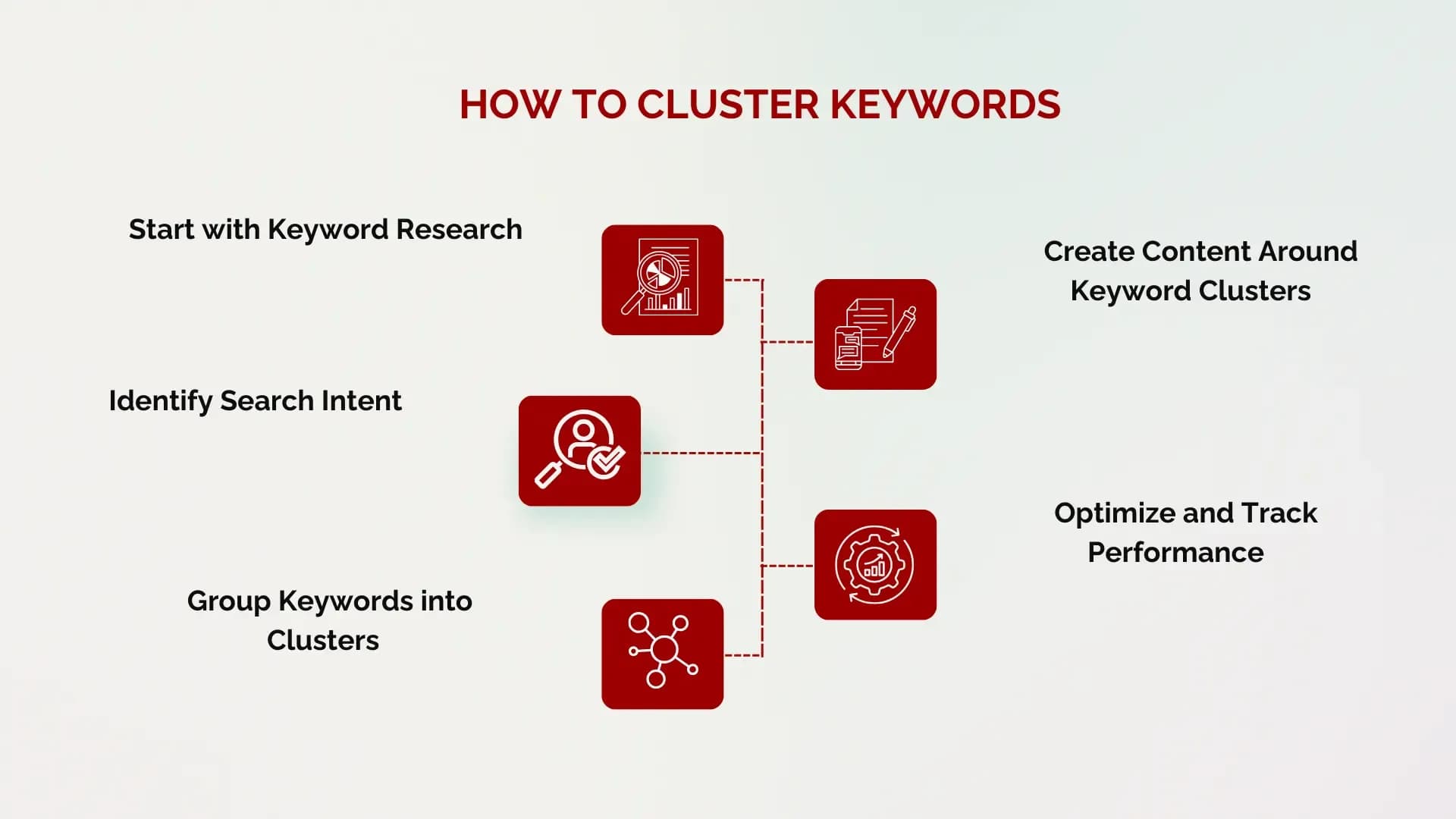
Now that we know why keyword clustering is essential, let’s dive into the actionable steps you can take to cluster your keywords effectively. As SEO experts at Seven Koncepts, we’ve created a foolproof workflow to help you achieve the best results.
1. Start with Keyword Research
The first step in keyword clustering is thorough keyword research. You’ll need a solid list of keywords to group, so using a keyword research tool or keyword planner is essential. There are various tools out there, like Google Keyword Planner, Ahrefs, or SEMrush, that allow you to discover high-ranking keywords in your niche.
When conducting keyword research, aim to identify:
- Short-tail keywords (e.g., “SEO”)
- Long-tail keywords (e.g., “SEO strategies for beginners”)
- Related terms (e.g., “on-page SEO”, “SEO techniques”, etc.)
These will form the foundation of your keyword clusters and content structure.
2. Identify Search Intent
One of the main objectives of keyword clustering is to address different types of search intent. Search intent is the reason behind a user’s query, whether they’re looking to buy something, seeking information, or just browsing.
To organise your keywords effectively, categorise them based on the following intent types:
- Informational: Users are looking for information (e.g., “what is keyword clustering?”)
- Navigational: Users are trying to find a specific website or page (e.g., “Seven Koncepts blog”)
- Transactional: Users are looking to make a purchase (e.g., “best keyword research tool 2025”)
Once you've identified the intent behind your keywords, it’s easier to group them into clusters. For example, keywords with informational intent might go together in one cluster, while transactional keywords might form another.
3. Group Keywords into Clusters
This is the heart of keyword clustering. We recommend grouping keywords that are closely related in terms of topic, search intent, and how they are used in real searches. Here are a few ways to approach this:
-
Topic-Based Clustering: Group keywords that belong to the same broad topic. For instance, if you’re targeting SEO, you could create clusters around specific SEO topics like on-page SEO, off-page SEO, and technical SEO.
-
Intent-Based Clustering: As we mentioned earlier, you can create clusters based on user intent. Informational keywords could form a cluster focused on providing educational content, while transactional keywords could form a cluster aimed at sales or product recommendations.
-
LSI (Latent Semantic Indexing) Keywords: These are closely related phrases and concepts that search engines associate with your main keywords. Using a keyword research tool (like Semrush or Ahrefs) can help you identify these related terms and add them to the right clusters.
4. Create Content Around Keyword Clusters
Once you’ve grouped your keywords into meaningful clusters, it’s time to create SEO-optimised content. This is where SEO writing and an SEO content writer come into play. With keyword clusters in hand, your content writers can create detailed, well-structured content that addresses each keyword cluster comprehensively.
For example, let’s say your keyword cluster is centred around "SEO basics". Your content could include:
- A pillar page that covers the basics of SEO in detail.
- Several blog posts that focus on specific aspects, like keyword research, content optimisation, and backlinking.
- Internal links between the pillar page and cluster content to establish relevance.
By using keyword clustering, you avoid keyword cannibalisation and ensure that your content targets multiple queries without your own pages competing against each other.
5. Optimize and Track Performance
Once your content is live, it’s important to track the performance of your keyword clusters. Use analytics tools to monitor how well your pages are ranking for the targeted clusters. Additionally, tools like Google Search Console can help you track click-through rates, impressions, and other vital metrics.
If your content isn’t ranking as well as expected, revisit your clustering and the page itself to make sure it’s aligned with the right search intent and fully optimised.
Tips from Seven Koncepts for Successful Keyword Clustering
-
Focus on User Intent: Always start with the intent behind each search query. This will guide your clustering efforts and ensure that your content resonates with your audience.
-
Use a Variety of Tools: While tools like Google Keyword Planner and SEMrush are great, we recommend using a combination of tools for more accurate keyword research.
-
Regularly Update Your Clusters: SEO is ever-evolving, and so are search trends. Periodically revisit your keyword clusters to make sure they’re still relevant and reflect how people search today.
Conclusion
Keyword clustering is no longer a nice-to-have; it's a must in 2026. With the shift toward semantic SEO and user-driven content, grouping your keywords into logical clusters is essential for better content, improved rankings, and a superior user experience. At Seven Koncepts, our team of SEO experts is always ready to help you navigate this process and create a strategic, data-backed SEO approach.
Ready to take your SEO strategy to the next level? Let’s get started! Reach out to the SEO experts at Seven Koncepts today and watch your website climb the search rankings!
FAQs
1. What is the best tool for keyword clustering?
There are several keyword research tools available, but platforms like SEMrush, Ahrefs, and Google Keyword Planner are commonly used to identify keywords for clustering.
2. How do I know if my keyword clusters are working?
Track your rankings and organic traffic regularly. If your content is starting to rank for more relevant keywords, it means your keyword clusters are likely working well.
3. Can keyword clustering help with content marketing?
Absolutely! Keyword clustering can guide your content creation process, ensuring you target a range of keywords in a way that aligns with user intent.
4. What’s the difference between keyword research and keyword clustering?
Keyword research involves finding relevant keywords to target, while keyword clustering organises those keywords into groups based on relevance and search intent.
5. How often should I update my keyword clusters?
It’s a good idea to revisit and update your keyword clusters periodically, at least once every 6-12 months. SEO trends, user behaviour, and search engine algorithms evolve, so refreshing your clusters ensures that your content stays relevant and continues to perform well in search results.