
In the world of digital marketing, understanding the intent behind a user's search can make or break your marketing funnel. The key to driving more relevant traffic, nurturing leads, and ultimately converting visitors into customers is mapping search intent effectively. This process, often referred to as search intent mapping, is a powerful tool that aligns your content with the exact needs and motivations of your target audience at every stage of their customer journey.
In this blog, we will explore how mapping search intent transforms your marketing funnel and strengthens your conversion optimisation efforts.
What is Search Intent Mapping?
Search intent refers to the underlying purpose or goal behind a user's search query. It’s crucial to understand that not all search queries are created equal. Some users are looking for information, others are seeking products to buy, and some might be ready to make a decision.
Search intent mapping is about aligning your content to meet these different stages of intent, ensuring your marketing efforts are not only seen but are also highly relevant to what users want.
When you map search intent, you create content that resonates with potential customers and nurtures them through the marketing funnel, from awareness all the way to decision-making.
The Three Key Types of Search Intent
1. Informational Intent (TOFU - Top of the Funnel)
At the top of the funnel (TOFU), users are in the discovery phase. They're looking for information, answers to questions, or solutions to problems. These search queries are often broad and unspecific. Examples of informational search queries could be “how to improve SEO” or “what is a marketing funnel?”
-
Focus on informative content: Blog posts, how-to guides, and infographics.
-
Target long-tail keywords: These are more specific queries that still reflect the need for general information. For instance, "how to improve conversion rate optimisation in e-commerce" is a specific informational query.
2. Navigational Intent (MOFU - Middle of the Funnel)
In the middle of the funnel (MOFU), users are beginning to narrow their search. They might be looking for a particular brand, service, or solution. For instance, a query like “best SEO agency for e-commerce” signals that the user is considering their options.
- Content to focus on: Case studies, product comparisons, or reviews.
- Landing pages matter: This is where your website landing page should clearly address the user's needs and demonstrates how your solution stands out.
3. Transactional Intent (BOFU - Bottom of the Funnel)
The bottom of the funnel (BOFU) represents users who are ready to make a decision and take action. Their search queries are more specific and typically include terms like “buy,” “price,” “discount,” or “sign up.” For example, “buy SEO services for my website” indicates a clear intent to make a purchase.
- Content to focus on: Product pages, landing pages with strong CTAs, and special offers.
- Conversion optimisation: Make sure your page is optimized to reduce friction and increase conversions- with fast load times, compelling CTAs, and clear pricing information.
How Search Intent Mapping Transforms Your Funnel
Mapping search intent helps you understand where a user is in their customer journey. By tailoring your content to meet their needs at each stage, you’re more likely to keep them engaged and move them closer to conversion. Here’s how it fits into your funnel:
1. TOFU Content – Attracting Visitors
At the top of the funnel, your goal is to attract a broad audience. Think about the problems or questions your target audience might have, and create content that addresses these. The key is to ensure your SEO writing is spot-on so that it ranks for relevant keywords.
Example: A blog post titled “How to Improve Your Website’s SEO in 2025” targets informational search intent. It’s valuable content that builds trust with visitors who may later turn into customers.
2. MOFU Content – Nurturing Leads
As users move into the middle of the funnel, they’re considering their options. This is where customer journey mapping becomes critical. Your goal here is to provide solutions that match their intent and showcase how your product or service can help them solve their problem.
Example: A product comparison page like “SEO Services vs. DIY SEO: Which Is Right for Your Business?” This type of content targets users weighing their options and nudges them towards a decision.
3. BOFU Content – Closing the Deal
At the bottom of the funnel, your goal is to convert visitors into customers. Users at this stage are looking for a specific solution, and they need a clear path to make their purchase decision. This is where conversion rate optimisation (CRO) tactics come into play.
Example: A high-converting website landing page that offers a free trial, a discount, or a clear CTA like “Get Started Now” for a service.
Key Elements for Successful Search Intent Mapping
To ensure your search intent mapping is effective and drives conversions, consider these key elements:
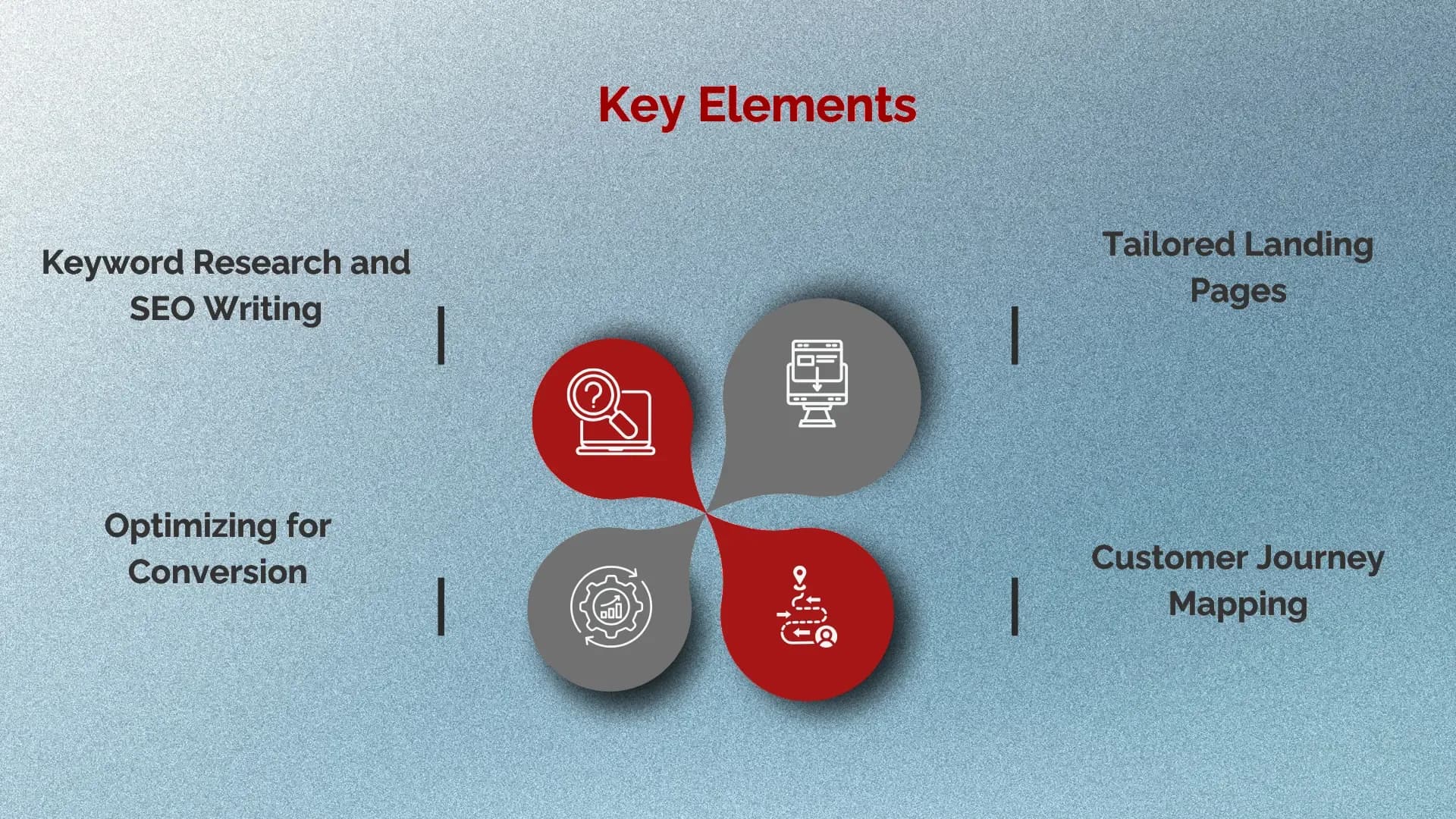
1. Keyword Research and SEO Writing
Thorough keyword research is crucial. Identify keywords that align with each stage of the funnel and make sure your content is optimized for those keywords. Use SEO writing techniques to ensure your content is both search engine-friendly and provides value to your audience.
Pro tip: Use tools like Google Keyword Planner or Ahrefs to find keyword variations tied to informational, navigational, and transactional queries.
2. Tailored Landing Pages
Landing pages are often the first point of contact with your brand. Make sure each page is designed with a specific purpose and matches the intent behind the user’s query. Whether it’s a blog post, product page, or service offering, the landing page should guide the visitor smoothly down the funnel.
3. Optimizing for Conversion
Whether it's through clear CTAs, compelling offers, or trust-building elements (such as testimonials and case studies), ensure your landing pages are set up for conversion optimisation. The goal is to reduce any friction that could cause potential customers to abandon the page and increase the likelihood of a conversion.
You can also consider PPC management services to complement your organic efforts and drive immediate results.
4. Customer Journey Mapping
By understanding your customers' behavior at each stage of the funnel, you can design content that feels personalized and timely. Customer journey mapping allows you to design content and funnels that speak directly to your audience’s needs and desires, increasing the chances of conversion.
Why You Need Search Intent Mapping in Your Funnel Strategy
Without search intent mapping, your marketing funnel risks becoming a chaotic mix of irrelevant content and missed opportunities. When you align your content with the intent behind users’ searches, you ensure that every piece of content serves a purpose. It’s not just about attracting traffic; it’s about attracting the right traffic- people who are genuinely interested in what you have to offer.
By understanding the nuances of search intent and mapping it to your funnel stages, you’re able to provide users with the right content at the right time, enhancing the customer experience and increasing conversions.
Conclusion
Search intent mapping is a powerful strategy for improving your marketing funnels and boosting conversion rate optimisation efforts. Whether you’re working on TOFU content to educate your audience, MOFU content to guide them toward a decision, or BOFU content to close the deal, understanding search intent allows you to meet your audience where they are and drive better results.
Ready to optimize your marketing funnels with the power of search intent? At Seven Koncepts, your trusted digital marketing agency, we craft tailored strategies that boosts conversions and enhance the entire customer journeys. Contact us today, and let’s start building smarter funnels together!
FAQs
1. What is search intent mapping, and why is it important?
Search intent mapping involves aligning your content with the purpose behind a user’s search query. It helps you create content that caters to the user's needs at each stage of their journey, from awareness to decision-making, improving conversion optimisation.
2. How can search intent mapping improve my marketing funnel?
By understanding the intent behind your audience’s searches, you can create content that matches their needs at every stage of the funnel. This approach ensures that you’re attracting the right traffic, nurturing leads effectively, and driving more conversions by providing relevant information when it’s needed most.
3. How do I align content with different types of search intent?
You can align content by categorizing it according to the user's stage in the funnel:
- TOFU (informational intent): Create blog posts and guides.
- MOFU (navigational intent): Offer product comparisons, case studies, or reviews.
- BOFU (transactional intent): Focus on landing pages with strong CTAs, product pages, and offers.
4. How do I optimize for conversion rate optimisation (CRO)?
To optimize for CRO, focus on creating fast-loading landing pages, clear CTAs, trust signals like testimonials or reviews, and reducing any friction in the checkout or sign-up process. Tailor your website landing page to match the search intent of the visitor to increase conversion chances.