
Rebranding is not about changing a logo or refreshing colours. It's a strategic decision that can redefine how a business is perceived, understood, and trusted. When done right, rebranding helps companies realign with their audience, sharpen their positioning, and prepare for growth. When done poorly, it creates confusion, alienates loyal customers, and wastes time and resources.
We’ve seen both outcomes firsthand. That’s why rebranding should never be reactive or cosmetic. It needs intention, clarity, and careful execution. In this guide, we’ll break down when a rebrand is actually necessary, why companies choose to do it, and how to execute it without losing credibility along the way.
What Rebranding Really Means (And What It Doesn’t)
Before going further, it’s important to clarify what rebranding is.
Rebranding is the process of reshaping how a brand is positioned, communicated, and experienced. While it often includes visual identity changes, it goes much deeper than that.
A rebrand may involve:
- Refining brand purpose and values
- Updating brand messaging and tone
- Redefining target audiences
- Aligning visual identity with strategy
- Improving consistency across touchpoints
What rebranding is not:
- A quick design refresh
- A response to boredom
- A trend-driven makeover
Rebranding is a strategic reset, not a surface-level change.
Recognizing the Signs That a Rebrand Is Due
One of the biggest mistakes businesses make is rebranding too late or for the wrong reasons. So how do we know when it’s time?
Here are some common signals that indicate a rebrand may be necessary.
1. Your Brand No Longer Reflects Who You Are
Businesses evolve. Offerings expand, audiences shift, and goals change. If your brand still represents an earlier version of your company, it creates a disconnect.
Signs include:
- Messaging that feels outdated
- Visual identity that no longer fits your maturity
- A gap between how you operate and how you present yourself
When the internal reality and external perception don’t match, trust suffers.
2. You’re Attracting the Wrong Audience
If your marketing efforts consistently bring in clients or customers who aren’t a good fit, your brand may be sending the wrong signals.
This often happens when:
- Positioning is unclear
- Visual identity doesn’t align with value
- Messaging tries to appeal to everyone
A rebrand helps clarify who you’re for and who you’re not.
2. Your Brand Looks Inconsistent Across Platforms
Inconsistency is a silent trust killer.
If your website, social media, sales decks, and marketing materials all look and sound different, users feel uncertainty. Rebranding helps create a unified system that brings clarity and credibility across every touchpoint.
3. You’re Entering a New Phase of Growth
Expansion into new markets, new services, or new audiences often requires a stronger, more refined brand foundation.
A rebrand can support:
- Market repositioning
- Product or service expansion
- Mergers or acquisitions
- Shifts from startup to scale-up
At this stage, the brand must evolve with the business.
Why Companies Choose to Rebrand
Rebranding is rarely driven by a single reason. It’s usually the result of multiple strategic needs converging.
Common motivations include:
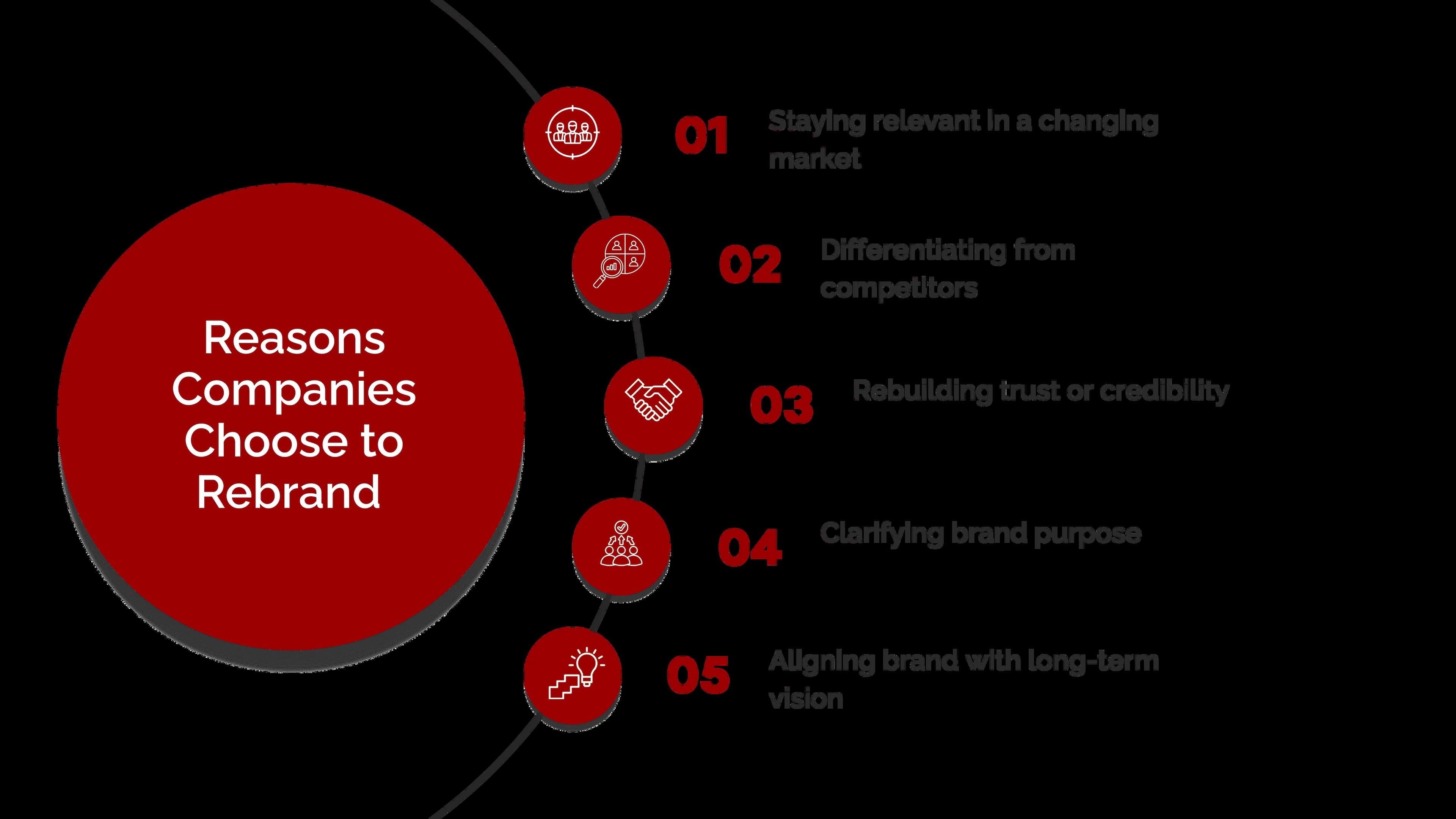
A strong example of this is Instagram.
Instagram’s rebrand is a strong example of how rebranding works best when it supports product evolution, not just visual change. When Instagram first launched, it was a simple photo-sharing app with a retro, camera-inspired identity. That visual language made sense because the product itself was simple and focused.
As Instagram grew, however, the product changed dramatically. It expanded beyond static photos into Stories, video, live content, Reels, shopping, and creator tools. The original identity no longer reflected what Instagram had become.
The rebrand wasn’t about looking trendy. It was about staying relevant.
Why Instagram Needed to Rebrand
Instagram reached a point where its old branding created friction rather than clarity.
Several factors made a rebrand necessary:
- The platform was no longer just about photos
- New features needed a flexible visual system
- The brand had to work across multiple formats and screens
- Competition in the social media space intensified
The original camera-style logo and muted color palette felt restrictive for a platform that had become dynamic, expressive, and creator-driven.
In short, the brand had outgrown its original identity.
What Changed in the Rebrand
Instagram’s rebrand focused on system-level changes, not isolated visuals.
1. A More Flexible Logo
The logo shifted from a detailed camera illustration to a simplified icon. This allowed it to scale better across devices, app icons, notifications, and small screen contexts without losing recognition.
2. A Bold, Gradient-Based Color System
The introduction of a vibrant gradient wasn’t just aesthetic. It allowed Instagram to:
- Stand out visually in crowded digital spaces
- Support a wide range of content formats
- Reflect creativity and diversity
The gradient became a flexible backdrop rather than a rigid brand color.
3. A More Expressive Design Language
The rebrand supported motion, video, and immersive content. It gave Instagram room to visually support creators, not compete with them.
This was especially important as video became central to the platform’s identity.
How Instagram Preserved Trust During the Rebrand
One of the biggest risks in rebranding is losing familiarity. Instagram avoided this by keeping core elements intact.
- The logo remained recognizable
- The app experience stayed intuitive
- Navigation patterns didn’t change dramatically
Users weren’t forced to relearn the product. The rebrand felt like an evolution, not a disruption.
This balance is critical in any successful rebrand. Instagram showed that successful rebranding respects existing user trust while preparing for future growth.
Planning a Rebrand: Strategy Before Design
One of the biggest pitfalls we see is jumping straight into visuals.
Before colors, logos, or typography, we need strategy.
A strong rebranding process begins with:
- Clear business goals
- Defined audience understanding
- Honest brand audits
- Competitive landscape analysis
Key strategic questions include:
- What do we want to be known for?
- Who are we speaking to now?
- What problem do we solve better than others?
- What should people feel when they interact with us?
Without clear answers, design decisions become guesswork.
Building Alignment Across Stakeholders
Rebranding affects more than marketing teams. It impacts leadership, sales, customer support, and even existing customers.
Successful rebrands involve early alignment with:
- Internal teams
- Leadership and decision-makers
- Key external stakeholders
This alignment helps:
- Reduce resistance to change
- Maintain consistency during rollout
- Ensure the brand is lived internally, not just shown externally
When teams understand why the rebrand is happening, they’re more likely to support it.
Avoiding Common Rebranding Pitfalls
Even well-intentioned rebrands can fail if certain risks aren’t managed carefully.
Changing Too Much, Too Fast
Radical change without context can confuse or alienate existing audiences. Continuity matters, especially for established brands.
A good rebrand balances three things:
- Familiarity
- Evolution
- Strategic clarity
Ignoring Existing Brand Equity
Every brand has something worth preserving, whether it’s trust, recognition, or emotional connection.
Throwing everything away risks losing what already works. A thoughtful rebrand builds on strengths instead of erasing them.
Treating Rebranding as a One-Time Event
A rebrand doesn’t end on launch day.
Without proper rollout, training, and ongoing application, even the best rebrand loses impact. Consistency over time is what builds credibility.
Designing and Building the New Brand Identity
Once strategy is clear, design becomes purposeful.
At this stage, rebranding typically includes:
- Visual identity systems
- Typography and color palettes
- Brand voice and messaging
- Design guidelines
- Digital experience updates
Design choices should reinforce strategy, not overshadow it. Every element should answer one question: Does this support how we want to be perceived?
Launching and Communicating the New Brand
How you launch a rebrand matters as much as the rebrand itself.
A strong launch:
- Explains the “why” behind the change
- Helps audiences understand what’s new
- Reinforces continuity where it matters
- Builds excitement without confusion
Clear communication helps audiences move with you, not away from you.
Measuring the Impact of a Rebrand
Rebranding isn’t just about aesthetics. It should deliver measurable outcomes. Indicators of success include:
- Improved engagement and conversion rates
- Clearer audience alignment
- Stronger brand recognition
- Better internal adoption
Over time, a well-executed rebrand strengthens trust and supports sustainable growth.
Conclusion: Rebranding Is a Strategic Investment
Rebranding done right is not about trends or visuals alone. It’s about alignment,. When a brand accurately reflects who you are and where you’re going, it becomes a powerful growth tool. When it doesn’t, it becomes a liability.
At Seven Koncepts, we believe rebranding should feel thoughtful, grounded, and strategic not disruptive for the sake of change.
If your brand no longer reflects who you are or where you’re headed, it may be time to rethink how you show up.
We help businesses plan and execute rebrands that are rooted in strategy, built with clarity, and launched with confidence.
Let’s rebrand with purpose, not guesswork. Get in touch with Seven Koncepts today.
FAQs
1. What is an example of rebranding?
A well-known example of rebranding is Instagram. As the platform expanded from photo sharing to video, creators, and commerce, its original brand no longer reflected what it had become. The rebrand introduced a more flexible logo and visual system that supported growth while keeping the brand recognizable. This shows how rebranding works best when it reflects real product evolution.
2. What is the main purpose of rebranding?
The main purpose of rebranding is to realign how a brand is perceived with who the business actually is today. Rebranding helps companies clarify positioning, stay relevant, attract the right audience, and support long-term growth. It’s not about change for the sake of it, it’s about accuracy, clarity, and future readiness.
3. What exactly is rebranding?
Rebranding is the strategic process of redefining a brand’s identity, positioning, and communication. It can include changes to visual identity, messaging, tone of voice, and overall brand experience. At its core, rebranding ensures that a brand consistently and clearly represents its values, purpose, and direction across all touchpoints.
4. What is a well-known example of rebranding?
One of the most famous rebrandings is Apple. Apple’s evolution from a complex, colorful identity to a clean, minimalist brand mirrored its shift toward simplicity, premium design, and innovation. The rebrand helped redefine the company’s perception and played a major role in its global success.
5. What are common rebranding mistakes?
Common rebranding mistakes include changing visuals without strategy, ignoring existing brand equity, rebranding without a clear reason, and failing to communicate the change properly. Other pitfalls include inconsistency during rollout and focusing on trends instead of long-term positioning. Successful rebranding avoids these by being intentional, well-planned, and aligned with business goals.