
Voice search isn’t just making a comeback; it’s becoming one of the most influential forces reshaping how people find information online. In 2026, with Google’s new AI-powered capabilities and smarter voice assistants, we’re seeing something we’ve been anticipating for years: voice search is finally living up to its potential. And as digital marketers, SEOs, and business owners, we can’t afford to ignore how this shift impacts the way we optimize content, structure websites, and create search-friendly experiences.
At Seven Koncepts, we’ve been watching this transformation closely and today, we’re diving deep into why voice search is back, how it’s evolving, and how voice search optimization can help your brand stay ahead of the curve.
Why Voice Search Is Surging Again in 2026
Remember the early hype around voice assistants? Everyone thought they’d change the world - until they didn’t. For years, voice queries were clunky, misheard, or returned results that weren’t helpful.
But things have changed dramatically.
Thanks to new models powering Google AI Chat, smarter NLP systems, and massive improvements in conversational search, voice assistants are now capable of:
- Understanding longer, more natural questions
- Interpreting user intent with context
- Handling follow-up questions in real conversations
- Delivering personalized, precise answers instantly
- Supporting regional and multilingual queries far better than before
What used to be robotic and unreliable now feels surprisingly human. And because people hate typing long queries on mobile, they’re choosing to speak instead of type, especially when they’re on the go.
That means the way we do voice SEO needs to evolve fast.
How People Use Voice Search in 2026 (and Why It Matters)
Voice searches are no longer just quick questions like “weather today” or “nearest gas station.” Users now treat AI systems almost like assistants.
Here’s what this shift looks like:
1. Longer, Natural, Conversational Queries
Typed searches: “best marketing agency California”
Voice searches: “Which is the best marketing agency in California that offers SEO and social media services?”
Users talk to AI the way they talk to people.
2. More Local Intent
Voice searches heavily revolve around “near me,” “closest,” “open now,” and “best around me.”
If businesses don’t integrate local SEO with voice search SEO, they lose huge opportunities.
3. More Transactional Searches
People use voice search to take actions fast:
- Booking appointments
- Checking product details
- Finding service providers
- Comparing businesses
- Making shopping decisions
4. Conversational follow-ups
This is a BIG one.
Voice assistants now keep context:
“Show me the best running shoes.” “What about waterproof ones?” “Which of these are under $100?”
This is not keyword search anymore, it’s conversational search.
Why Voice Search Optimization Matters More Than Ever
If your content isn’t optimized for natural language, you’re invisible in voice search. In simple terms:
Voice search isn’t just a feature. It’s a ranking system of its own.
Here’s why voice search optimization is critical in 2026:
- Over 50%of voice searches return just one result, not ten blue links People rely on hands-free search while driving, cooking, working, traveling.
- Voice interactions feed into Google’s knowledge graph.
- AI chat systems pull answers from voice-friendly content.
- Businesses optimized for voice earn higher trust and engagement.
This means the brands that optimize early get the spotlight. And the best part? Most competitors still haven’t caught up.
How We Can Optimize for Voice Search (2026 Edition)
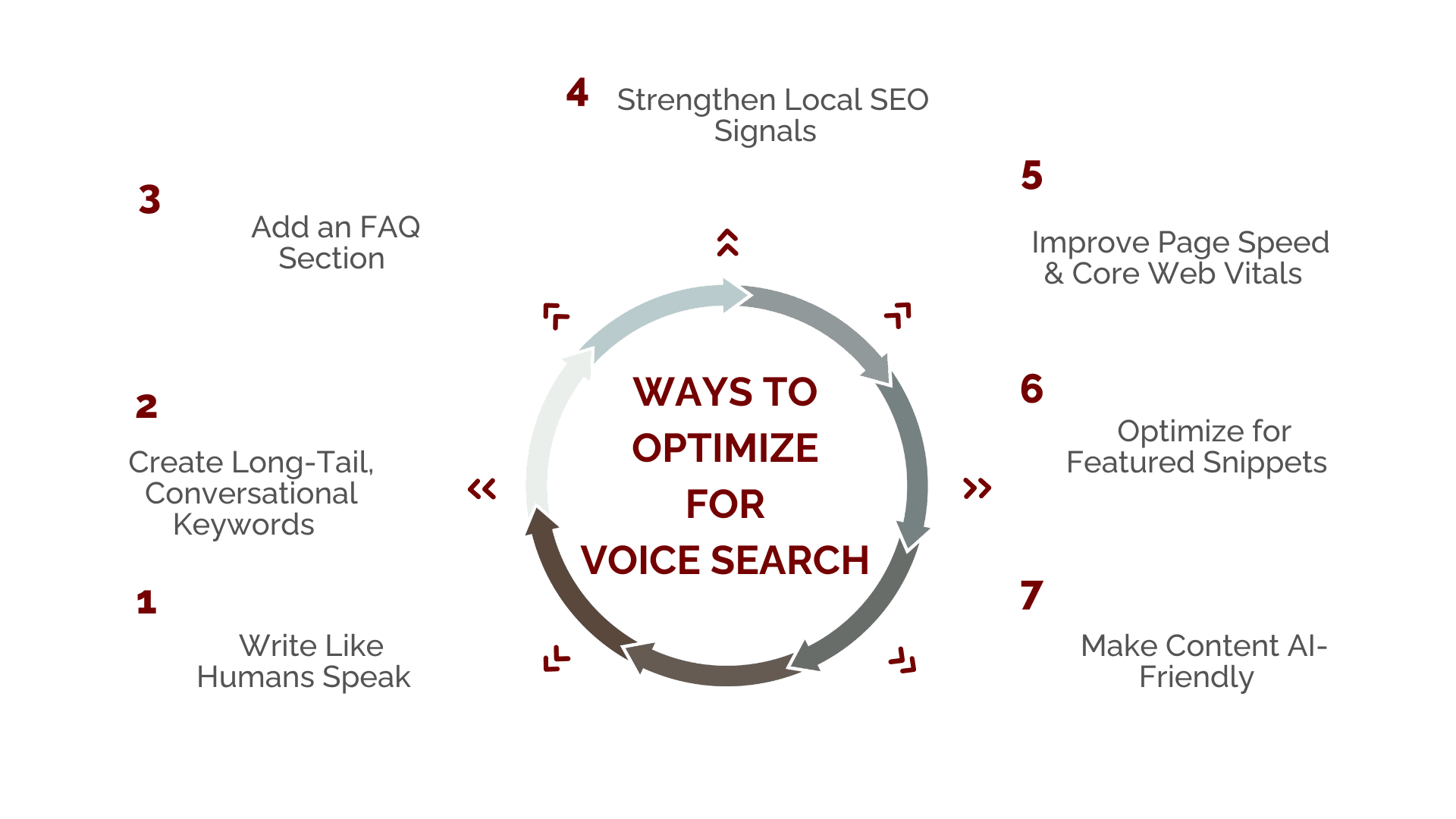
Now let’s get practical. Here are proven strategies we use at Seven Koncepts to help clients dominate voice search rankings.
1. Write Like Humans Speak
To win at voice search optimization, your content must:
- sound natural
- answer questions directly
- avoid keyword stuffing
- feel conversational
Actionable tips:
- Use question-based headings (How, What, Why, Where)
- Add short, direct answers under each heading
- Write in a tone that mimics real conversation
Voice assistants love content that sounds human, not robotic.
2. Create Long-Tail, Conversational Keywords
Instead of targeting: “voice seo”
Target:
- “How do I optimize for voice search in 2026?”
- “What is voice search SEO and why does it matter?”
- “Best tips to improve voice search optimization for small businesses”
These long, specific phrases help your site rank for spoken queries.
3. Add an FAQ Section (Voice Assistants Love This!)
FAQs give Google short, direct, structured answers- perfect for voice assistants and platforms like Google AI Chat andany other chatbots.
Use FAQs for:
- “how to” questions
- “why” questions
- “best” queries
- location-based questions
This is one of the most powerful techniques in voice search SEO.
4. Strengthen Local SEO Signals
Since most voice queries have local intent, we need to tighten local optimization.
Here’s how:
- Keep your Google Business Profile updated
- Use consistent Name, Address, Phone (NAP) everywhere
- Add local keywords naturally
- Create location-based landing pages
Google often pulls these signals directly into local voice results.
5. Improve Page Speed & Core Web Vitals
Voice search results often show from websites that load fast.
Why?
Because when someone asks a question, a voiceassistant can’t wait eight seconds for a page to load. It wants a source now.
Improve:
- Mobile responsiveness
- Image compression
- Caching
- Hosting performance
Fast pages = higher voice search rankings.
6. Optimize for Featured Snippets
Since voice assistants often read featured snippet answers, winning the snippet means winning voice search.
To do this:
- Write short, clear answers
- Use bullet points
- Add numbered steps
- Define concepts in one sentence
7. Make Content AI-Friendly
Platforms like Google AI Chat rely on structured, well-organized information.
To support AI systems:
- Use schema markup
- Add FAQ schema
- Use HowTo schema
- Structure content with clear headings
This makes it easier for AI to pull information from your content.
The Future of Voice SEO: What We Expect Next
As voice search grows, here are trends we predict:
Hyper-personalized results
AI assistants will know your preferences and suggest personalized recommendations.
More voice-driven commerce
Shopping, booking, reservations- everything will shift to voice.
AI chat integrations everywhere
Voice will blend with chat models, meaning websites must be AI friendly.
Hands-free everything
From smart homes to cars, voice will dominate daily interactions.
We’re not preparing for the future - we’re living in it.
Ready to Optimize Your Business for Voice Search?
At Seven Koncepts, we help businesses stay ahead of every major SEO shift especially emerging trends like voice search, AI-driven results, and conversational search.
If you want your brand to be the one voice assistants recommend, we’re here to help you optimize for voice search and dominate the future of SEO.
Contact Seven Koncepts today and let’s grow your brand in the era of voice-powered search.
FAQs
1. What is voice search optimization?
Voice search optimization is the process of preparing your site and content to rank for spoken queries on devices like Google Assistant, Siri, and AI chat systems.
2. How is voice SEO different from regular SEO?
Voice SEO focuses on conversational language, longer queries, and direct answers, while traditional SEO focuses on typed keywords.
3. Why is voice search important for businesses?
Because voice searches often lead to quick decisions—like calling, buying, or visiting a business. It boosts visibility and helps brands appear when users need them most.
4. Do I need separate content for voice search?
Not always. But you DO need conversational content, FAQs, and structured answers to rank well.
5. Can voice search help local businesses?
Absolutely! Most voice searches include phrases like “near me” or “open now,” making it a huge opportunity for local visibility.