
Typography isn’t just about choosing a font that looks good. It’s about choosing a font that works. In 2026, when digital attention spans are shorter than ever, typography plays a critical role in how users perceive, trust, and engage with a brand. Fonts speak before words do, and the right typography can quietly guide users toward action, while the wrong one can push them away without usersever knowing why.
In digital marketing, typography isn’t decoration. It’s persuasion.
Why Typography Matters More Than Ever
We live in a scroll-first world. Websites, ads, landing pages, apps- everything competes for attention. While visuals and color grab the eye, typography controls the experience.
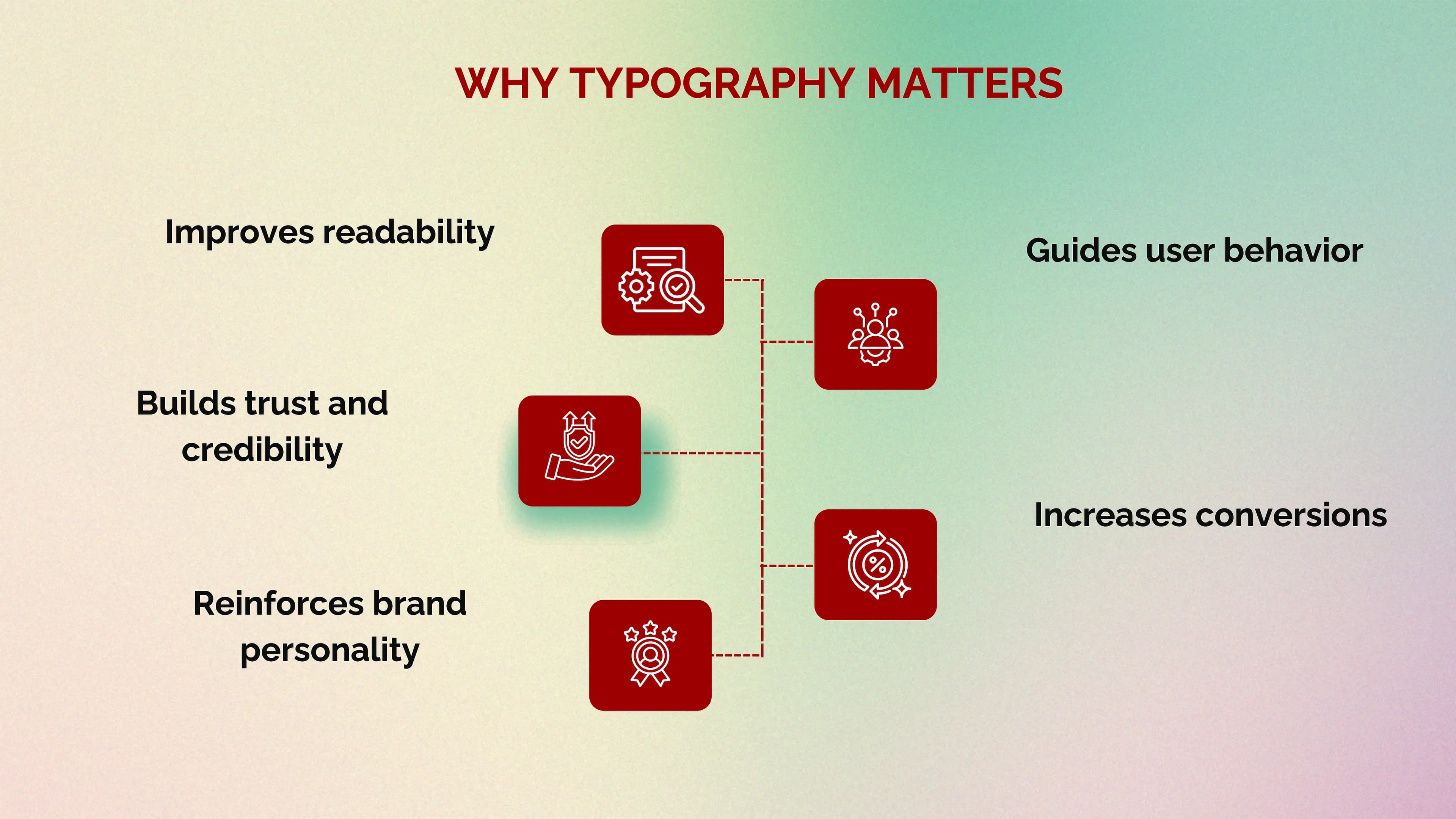
Bad typography does the opposite and often silently kills performance.
As marketers and designers, we’ve seen how small changes in font weight, spacing, or hierarchy can significantly impact engagement. Typography influences how long people stay, what they read, and whether they act.
Fonts Have Personality
Every font carries a personality. Even if you didn’t consciously choose one, your audience will feel it.
Think about how different these feel:
- A bold, geometric sans-serif
- A soft, rounded font
- A sharp, high-contrast serif
- A handwritten script
Each one sends a message before the content is processed.
Typography shapes perception in ways words alone can’t.
The Psychology Behind Fonts That Convert
Typography works because it taps into human psychology. Fonts influence emotion, clarity, and trust; three pillars of conversion.
Here’s how different font styles tend to perform:
Serif Fonts: Authority & Tradition
Serif fonts are often associated with credibility, heritage, and professionalism. They work well for:
- Editorial content
- Financial or legal brands
- Thought leadership
Used correctly, serif fonts can increase trust and perceived expertise.
Sans-Serif Fonts: Clarity & Modernity
Sans-serif fonts dominate digital platforms for a reason, they’re clean, readable, and adaptable.
They’re ideal for:
- Websites and mobile apps
- SaaS and tech brands
- Conversion-focused landing pages
Most high-performing digital experiences rely on sans-serif typography because it reduces friction.
Display Fonts: Personality & Impact
Display fonts are expressive and bold. They grab attention but must be used sparingly.
They’re best for:
- Headlines and hero sections
- Campaign visuals
- Brand statements
Overusing display fonts can hurt readability, but when balanced well, they add memorability and character.
Script Fonts: Emotion & Human Touch
Script fonts feel personal and expressive. They work when:
- The brand is emotional or creative
- Used in short phrases or accents
They’re powerful when subtle and damaging when overdone.
Typography and Brand Identity: Consistency Converts
Typography is one of the strongest pillars of brand identity. When users repeatedly see the same font styles across platforms, something powerful happens, they start to recognize the brand without reading the logo.
Strong typography systems:
- Improve brand recall
- Build familiarity and trust
- Create a cohesive digital presence
This is why professional branding and design services focus heavily on typography systems, not just font selection.
A brand without typographic consistency feels fragmented. A brand with it feels confident.
How Typography Influences Digital Conversions
Typography doesn’t just affect aesthetics, it directly impacts performance.
We’ve seen typography influence:
- Bounce rates
- Scroll depth
- Click-through rates
- Form completions
- Purchase decisions
Here’s how fonts guide user behavior:
- Hierarchy tells users what to read first
- Font weight creates emphasis without shouting
- Line spacing improves comprehension
- Contrast directs attention to CTAs
When typography is intentional, users don’t feel “sold to.” They feel guided.
Typography in Web Design and Landing Pages
In conversion-focused web design, typography does most of the heavy lifting.
High-performing pages typically use:
- One primary font family
- Clear headline-to-body contrast
- Generous spacing
- Simple, readable body text
Typography that converts doesn’t try to impress, it tries to communicate clearly. This is especially important for service-based businesses, where trust and clarity are essential.
Fonts and Brand Voice: Matching Words With Tone
Typography should match how a brand speaks.
If your brand voice is:
- Bold: typography should be confident
- Friendly: typography should feel approachable
- Premium: typography should feel refined
- Innovative: typography should feel modern
When font choice clashes with brand voice, users feel something is “off,” even if they can’t explain it.
Great brand marketing aligns voice, visuals, and typography into one clear message.
Common Typography Mistakes That Hurt Conversions
Even strong brands sometimes get typography wrong. Some common mistakes we still see:
- Using too many fonts on one page
- Choosing style over readability
- Poor mobile typography scaling
- Weak contrast between text and background
- Ignoring line length and spacing
Typography should feel invisible. If users notice the font too much, it’s usually doing the wrong job.
Typography Trends in 2026 (That Actually Work)
Trends come and go but some are rooted in usability, not hype.
In 2026, effective typography trends include:
- Variable fonts for responsive design
- Large, confident headlines
- Minimal font pairings
- Accessibility-first typography
- Strong contrast and whitespace
The goal isn’t to chase trends, it’s to use what improves experience and conversion.
Typography Is a Strategic Marketing Tool
Typography sits at the intersection of design and marketing. It’s not just a visual choice, it’s a business decision.
When used correctly, typography:
- Strengthens brand positioning
- Improves digital marketing performance
- Enhances user experience
- Builds long-term trust
That’s why typography should never be an afterthought.
Take Apple as a classic example. Apple relies on clean, minimalist sans-serif typography (San Francisco) across its website, product interfaces, and marketing. The font feels modern, neutral, and effortless, exactly how Apple wants its products to feel. This typography reduces cognitive load, keeps the focus on the product, and builds trust through clarity. In digital marketing terms, this simplicity supports higher engagement and smoother conversion paths.
For a premium perspective, look at Vogue. Vogue’s iconic serif typography communicates authority, elegance, and legacy. The high-contrast letterforms instantly signal luxury and editorial credibility. Even in digital formats, this typography positions Vogue as aspirational and timeless, reinforcing its brand identity and value perception.
Conclusion
Typography that converts doesn’t scream for attention, it earns it.
Fonts with personality help brands feel human, confident, and intentional. In a digital world overflowing with content, typography is one of the few tools that can quietly guide behavior without overwhelming the user.
When we design typography with purpose, we don’t just make things look better, we make them work better.
Ready to Build Typography That Converts?
At Seven Koncepts, we don’t just pick fonts, we build typographic systems that support brand identity, improve digital performance, and convert attention into action. From branding and design services to conversion-focused web design, we help brands communicate clearly and confidently.
Let’s give your brand a voice people trust and typography that converts.
FAQs
1. How does typography affect conversions?
Typography impacts readability, trust, and attention flow, all of which directly influence user decisions.
2. Is sans-serif always better for websites?
Not always, but it’s often more readable on screens. The key is alignment with brand personality and user experience.
3. How many fonts should a brand use?
Ideally one or two. Too many fonts create confusion and weaken brand identity.
4. Can typography really impact brand trust?
Yes. Clean, consistent typography signals professionalism and credibility.
5. Should typography be part of a brand strategy?
Absolutely. Typography is a core element of branding and plays a major role in digital marketing success.