
Keyword research is the backbone of every winning International SEO strategy. Whether you’re building a new website, writing blogs, or planning a content calendar, knowing what people search for (and why) puts you in control of your traffic. Over the years, we’ve tried dozens of free and paid SEO tools, but only a handful consistently deliver results.
So today, we’re sharing the 5 keyword research tools we actually use daily at Seven Koncepts and why they’re worth your attention.
This isn’t one of those generic “10 tools you can use” articles. This is a practical, hands-on guide based on real-world usage, real projects, and real ranking results.
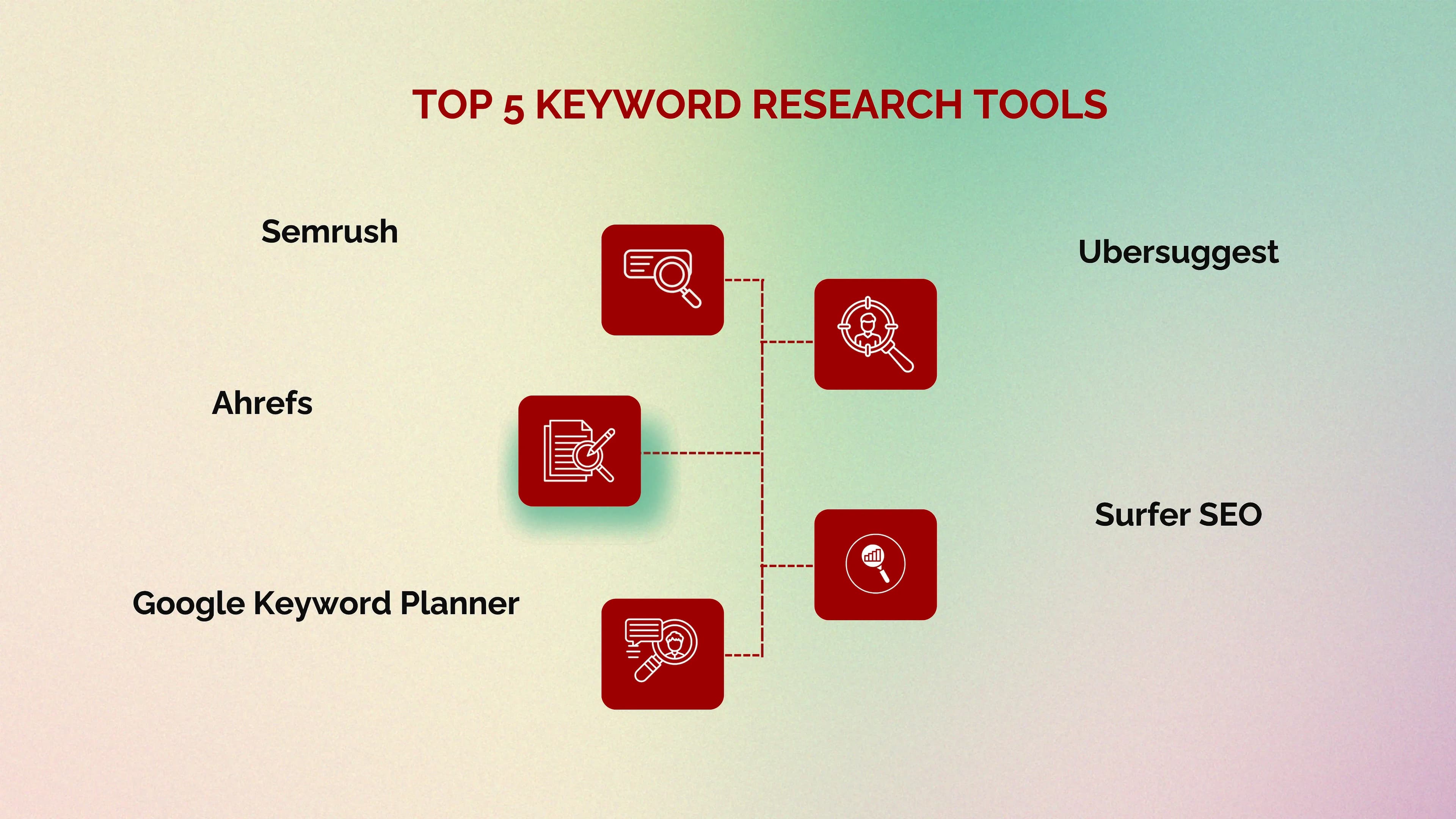
1. SEMrush
If we had to pick one tool to build an SEO strategy from scratch, we’d choose SEMrush every time.
SEMrush is an all-in-one SEO suite that covers keyword research, competitor analysis, content gaps, and even PPC insights. Its dashboard is built for marketers - everything you need is clean, visual, and easy to interpret.
Why We Use SEMrush
- Massive keyword database
- Extremely accurate keyword difficulty scoring
- Best-in-class competitor keyword gap analysis
- Real-time trends and intent breakdowns
- Shows keyword clusters, topic groups, and related questions
- Helps you understand what’s working for your competitors and replicate it
What You Can Do With SEMrush
You can:
- Analyze competitor websites (find every keyword they rank for)
- Identify keyword gaps between you and your competitors
- Discover long-tail and question-based keywords
- Build full topic clusters around a single keyword
- Audit your site for technical SEO issues
- Track your keyword rankings daily
Who This Tool Is Best For
- SEO agencies
- Content teams
- Bloggers and brands scaling SEO
- Businesses investing seriously in organic growth
If you’ve ever felt lost about “where to start,” SEMrush gives you a blueprint.
2. Ahrefs - Best for Deep Keyword & Backlink Analysis
Ahrefs is the tool we use when we want data accuracy and deep research, especially for competitive niches.
It’s incredibly powerful for analyzing SERPs, competitor backlinks, and keyword difficulty. Where SEMrush gives you breadth, Ahrefs gives you depth.
Why Ahrefs Is Good
- One of the largest keyword databases
- Very accurate Keyword Difficulty algorithm
- SERP overview shows real-time ranking pages
- Advanced filters help find low-competition keywords
- Click metrics show actual user behavior, not just search volume
What You Can Do With Ahrefs
This tool is like the microscope of keyword research.
You can:
- Discover hidden low-competition keywords
- View full backlink profiles of competing pages
- Reverse engineer your competitors' strategies
- Find topics competitors aren’t targeting yet
- Analyze click-through rates and search intent deeper than any other tool
Who This Tool Is Best For
- SEO professionals
- Businesses in competitive industries
- Agencies doing deep-dive SEO work
- Content teams optimizing existing content
If your strategy relies heavily on competitive research, Ahrefs is unmatched.
3. Google Keyword Planner - Best Free Keyword Research Tool
Sure, it’s built for Google Ads. But Google Keyword Planner is still one of the most trusted sources of raw keyword data because it comes directly from Google.
It’s not flashy, but it’s accurate and that makes it essential.
Why Google Keyword Planner Is Good
- 100% free
- Data comes straight from Google
- Great for finding seed keywords
- Helps identify seasonal and trending keywords
- Shows competition levels and bidding ranges
What You Can Do With It
You can:
- Find primary keywords to build topic clusters
- Discover broad keyword ideas using filters
- Analyze monthly search trends
- Identify commercial-intent keywords for landing pages
- Compare different keywords side-by-side
Who This Tool Is Best For
- Beginners learning keyword research
- Small businesses with limited budget
- PPC advertisers
- SEO pros who want “source of truth” data
Even if you use Ahrefs or SEMrush, Google Keyword Planner should still be part of your workflow.
4. Ubersuggest
Ubersuggest is the tool we recommend when someone wants the essential features without the premium price tag. It’s clean, easy to use, and surprisingly insightful for keyword and content research.
Why Ubersuggest Is Good
- Very beginner-friendly interface
- Affordable alternative to premium SEO tools
- Provides keyword ideas, volume, competition, and CPC
- Includes SEO analyzer and site audit tools
- Offers content ideas based on top-ranking pages
What You Can Do With Ubersuggest
You can:
- Generate quick keyword ideas
- Discover keyword difficulty and content suggestions
- Analyze competitor pages
- Find long-tail variations and questions
- Get SEO site checkup reports
Who This Tool Is Best For
- Freelancers
- Small businesses
- New bloggers
- Startups on a budget
If you want a balance between affordability and functionality, Ubersuggest is perfect.
5. Surfer SEO - Best for Content Optimization & On-Page SEO
Once you have keywords, the next challenge is writing content that ranks. That’s where Surfer SEO becomes a game changer.
Surfer analyzes the top-ranking pages and tells you exactly how to structure and optimize your content, in real time.
Why Surfer SEO Is Good
- Gives keyword clusters and NLP-based keyword suggestions
- Real-time content editor for on-page optimization
- Shows ideal word count, headings, images, and keyword usage
- Helps you understand competitor content structure
- Perfect for updating old blogs that need a rankings boost
What You Can Do With Surfer SEO
You can:
- Build SEO-friendly content briefs
- Optimize new content as you write
- Fix underperforming blog posts
- Increase topical authority through keyword clusters
- Boost rankings by matching search intent more accurately
Who This Tool Is Best For
- Content writers
- SEO specialists
- Bloggers
- Agencies optimizing client websites
If content is your biggest growth channel, you’ll love Surfer SEO.
Why We Use Multiple Tools (And You Should Too)
One tool will never give you everything.
That’s why our process at Seven Koncepts combines:
- SEMrush: Strategy, clusters, competitor insights
- Ahrefs: Deep keyword & backlink research
- Google Keyword Planner: Verified search volume
- Ubersuggest: Fast, budget-friendly ideas
- Surfer SEO: Optimizing content for actual rankings
This combination helps us:
- Choose the right keywords
- Validate search demand
- Understand competition
- Create content that ranks
- Improve older pages strategically
This is the exact system we use for clients and it works.
Conclusion
Keyword research isn’t just picking random phrases; it’s understanding what people need and creating content that answers those needs better than anyone else. These five tools help us do that daily, whether we’re building SEO strategies, optimizing a website, or planning content calendars.
If you want to level up your organic traffic, these tools (and the right strategy) will get you there.
Ready to Grow Your SEO With a Proven Strategy?
At Seven Koncepts, we don’t just use these tools we use them strategically to deliver real results.
If you need help with keyword research, content planning, or SEO growth… Reach out to Seven Koncepts and let’s build your SEO roadmap.
FAQs
1. Which tool is best for beginners?
Ubersuggest and Google Keyword Planner are the easiest to start with due to their simplicity and cost-effectiveness.
2. What’s the best tool for competitor research?
SEMrush and Ahrefs both excel, but SEMrush gives a better visual overview for beginners.
3. What’s the best free keyword research tool?
Google Keyword Planner remains one of the most accurate free tool available.
4. Which tool helps with writing SEO-optimized content?
Surfer SEO is specifically built for content optimization and on-page improvement.
5. Should I use more than one keyword research tool?
Absolutely. Each tool has strengths- combining them gives you a well-rounded strategy.