
Predictive analytics is transforming the way we plan, launch, and optimize marketing campaigns. Instead of guessing what might work, we now use data, patterns, and machine learning to anticipate customer behavior and make smarter decisions before spending a single marketing dollar. In a world where attention is short and competition is intense, predictive analytics helps us move from reactive marketing to proactive strategy.
Let’s break down what that really means and how we can use it to build campaigns that perform better, convert faster, and scale intelligently.
What Is Predictive Analytics in Marketing?
Predictive analytics is the process of using historical data, statistical models, and machine learning algorithms to forecast future outcomes. In marketing, it allows us to predict things like:
- Which leads are most likely to convert
- Which customers are at risk of churning
- What content a user is most likely to engage with
- When a prospect is ready to make a purchase
- Which channel will deliver the highest ROI
Instead of reacting after results come in, we can shape our campaigns before they go live. That shift changes everything.
Why Smarter Campaigns Matter More Than Ever
Marketing budgets are under pressure. Customer expectations are higher. Platforms change constantly. If we rely on instinct alone, we leave growth to chance.
Smarter campaigns are built on clarity. They answer questions like:
- Who exactly are we targeting?
- What message resonates most?
- Which platform deserves the biggest investment?
- When should we engage the audience?
- How do we personalize at scale?
Predictive analytics gives us answers backed by data, not assumptions.
How Predictive Analytics Works Behind the Scenes
At its core, predictive analytics works through three main steps:
1. Data Collection
We gather data from multiple touchpoints, such as:
- Website behaviour
- CRM systems
- Email interactions
- Social media engagement
- Past campaign performance
- Purchase history
The cleaner and more relevant the data, the stronger the predictions.
2. Pattern Recognition
Machine learning models analyze this data to identify patterns. For example:
- Customers who download a pricing guide are 60%more likely to convert
- Users who visit a product page twice within 48 hours are close to purchase
- Certain demographics respond better to video content
These patterns reveal insights that are nearly impossible to detect manually.
3. Forecasting and Optimization
Based on these patterns, we forecast future behavior. We can then:
- Adjust ad budgets toward high performing segments
- Personalize messaging for specific user groups
- Retarget high intent audiences
- Optimize campaign timing
This is where campaigns become smarter and more efficient.
Real World Applications of Predictive Analytics
Predictive analytics is not just theory. It has practical, measurable applications across industries.
Lead Scoring
We can rank leads based on their likelihood to convert. Sales teams then focus only on high quality prospects. This improves close rates and reduces wasted effort.
Customer Segmentation
Instead of broad targeting, we create dynamic audience segments. For example:
- First time visitors
- Repeat customers
- High value clients
- Price sensitive buyers
Each segment receives tailored messaging.
Personalized Content Recommendations
Think of how platforms recommend products or articles based on past behaviour. We can apply the same concept to:
- Email marketing
- Website content
- Paid advertising
- Product suggestions
Personalization increases engagement and conversion rates.
Churn Prediction
By analyzing behavior patterns, we can identify customers who are likely to leave. This allows us to:
- Offer timely incentives
- Improve customer experience
- Launch retention campaigns
Retention is often more profitable than acquisition.
Benefits of Predictive Analytics for Campaign Performance
When we integrate predictive analytics into our marketing strategy, the results compound over time.
1. Higher Conversion Rates
We reach the right people with the right message at the right time.
2. Better Budget Allocation
We stop wasting money on low performing segments and channels.
3. Improved Customer Experience
Audiences receive content and offers that feel relevant and valuable.
4. Faster Decision Making
Instead of waiting weeks to analyze performance, we rely on predictive insights from the start.
5. Scalable Growth
As data increases, predictions become more accurate, making future campaigns even stronger.
Predictive Analytics and AI Powered Marketing
Artificial intelligence plays a major role in modern predictive analytics. AI marketing tools can process massive datasets in seconds and uncover patterns we would otherwise miss.
We are now able to:
- Automate campaign optimization
- Predict lifetime customer value
- Generate dynamic ad creatives
- Optimize bidding strategies in real time
The combination of predictive analytics and AI marketing strategy creates a powerful engine for growth.
Challenges to Consider
While predictive analytics is powerful, it requires careful implementation.
1. Data Quality Matters
Inaccurate or incomplete data leads to unreliable predictions. Clean data is non negotiable.
2. Privacy and Compliance
We must respect data privacy regulations and build trust with users.
3. Strategic Alignment
Technology alone is not enough. Predictive insights must align with clear marketing objectives.
When implemented thoughtfully, these challenges become manageable, and the benefits far outweigh the effort.
Building a Predictive Campaign Strategy
If we want to integrate predictive analytics into our campaigns, here is a practical roadmap:
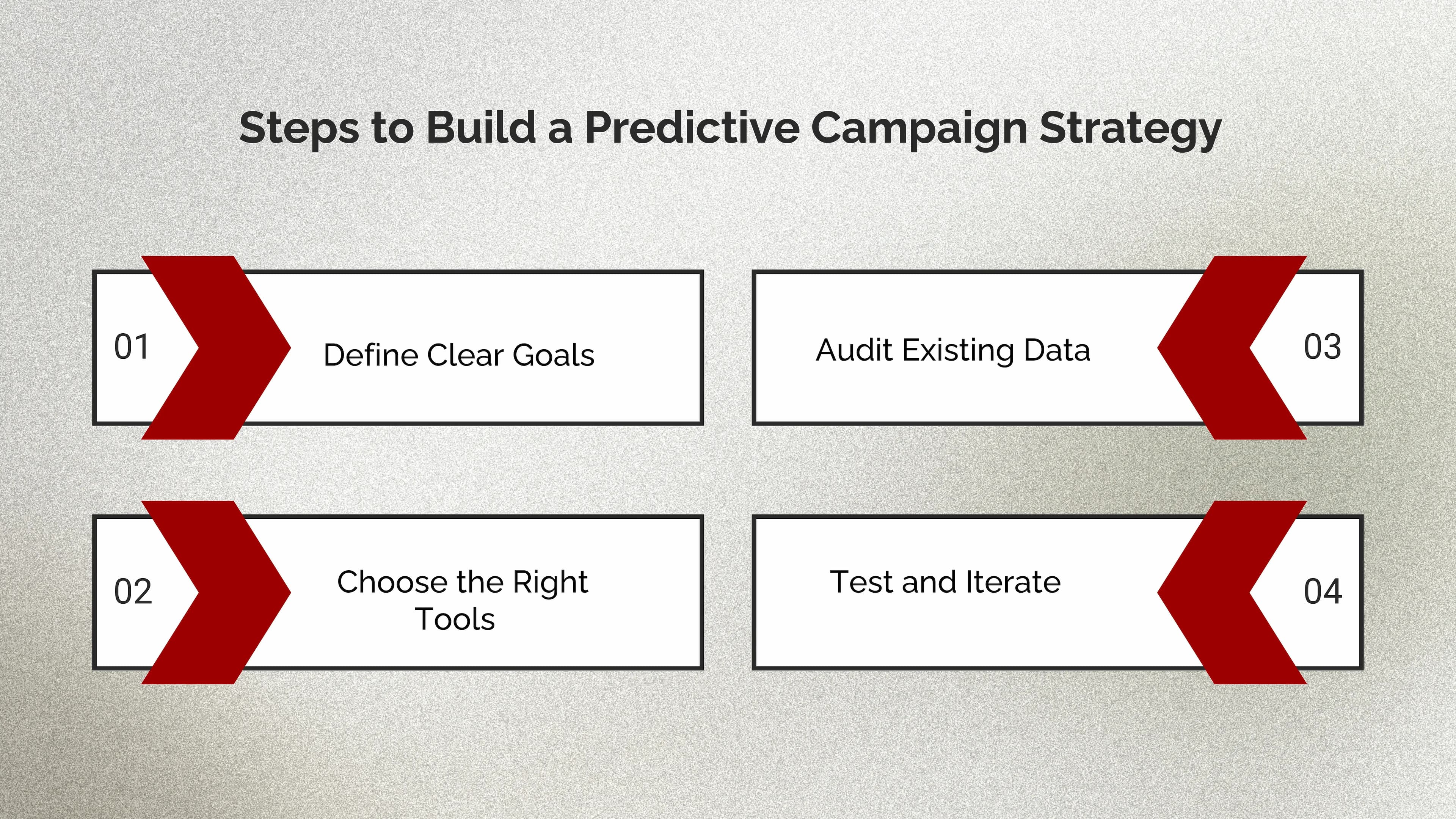
Step 1: Define Clear Goals
Are we aiming to increase conversions, reduce churn, improve ROI, or scale acquisition? Clear goals guide the model.
Step 2: Audit Existing Data
We assess what data we already have and identify gaps.
Step 3: Choose the Right Tools
Depending on our business size, we may use CRM platforms, marketing automation tools, or custom AI models.
Step 4: Test and Iterate
Predictive models improve over time. We test campaigns, measure results, and refine continuously.
The Future of Campaign Planning
Marketing is moving toward intelligence driven decision making. In the near future, predictive analytics will not be optional. It will be the foundation of competitive marketing.
Brands that adopt predictive modelling today will:
- Respond faster to market changes
- Deliver hyper personalized experiences
- Achieve stronger ROI
- Build deeper customer relationships
Smarter campaigns are not about spending more. They are about thinking ahead.
Why We Believe in Data Driven Strategy
At Seven Koncepts, we believe marketing should be strategic, scalable, and measurable. Predictive analytics aligns perfectly with our philosophy of building brands that grow with clarity and purpose.
When we combine data intelligence with creative strategy, campaigns stop being experiments and start becoming predictable growth systems.
If you are looking to enhance your digital marketing strategy, improve conversion rates, or implement AI driven campaign optimization, this is the moment to act.
Ready to Build Smarter Campaigns?
If you want to move beyond guesswork and start building performance focused marketing systems, we can help. At Seven Koncepts, we specialize in:
- Data driven digital marketing strategy
- Conversion rate optimization
- Performance marketing services
- Brand positioning and growth strategy
Let’s turn your data into insight and your insight into measurable growth. Connect with Seven Koncepts today and let’s build smarter campaigns together.
FAQs
1. What is predictive analytics in simple terms?
Predictive analytics uses past data to forecast future outcomes. In marketing, it helps predict customer behavior and campaign performance.
2. Is predictive analytics only for large companies?
No. Small and medium businesses can also benefit by using CRM data and marketing automation tools. The scale may differ, but the impact can still be significant.
3. How accurate are predictive models?
Accuracy depends on data quality, model selection, and continuous optimization. With clean data and proper testing, predictive models can be highly reliable.
4. Does predictive analytics replace human marketers?
Not at all. It enhances decision making. Human creativity and strategy remain essential.
5. How long does it take to see results?
Some improvements can be seen within a few campaign cycles. Long term results become stronger as more data is collected and models improve.