
Having a great product used to be the goal - build something innovative, market it well, and watch it take off. But that formula doesn’t hold up anymore. In today’s connected world, success depends not just on what you build, but on what you build with others. Today’s customers no longer want isolated experiences; they want products and brands that fit naturally into their daily lives, connect with what they already use, and evolve with their needs.
That’s where ecosystem thinking and strategic branding come together. It’s not about competing alone but about creating meaningful connections through partnerships that make your product part of something bigger. The future of innovation and branding isn’t one brand doing it all; it’s brands working together to deliver experiences no single company could achieve alone.
What Ecosystem Thinking Really Means
Ecosystem thinking is the shift of the question from “How can we improve our product?” to “Who can we collaborate with to make our product better for the user?”
It’s a mindset that views your product as part of a broader network rather than a standalone innovation. Whenever two companies connect their technologies or services, they create a shared ecosystem that enhances value for both customers and brands.
Think about the examples you already use every day:
- Apple and Nike partnered to make fitness tracking smarter through Apple Watch integrations.
- Samsung works closely with Google to optimize Android for its Galaxy devices, giving users a seamless experience between phone, TV, and wearables.
- Microsoft and OpenAI joined forces to bring generative AI into tools like Word and Excel, transforming everyday productivity.
- Tesla collaborates with Panasonic for battery technology, ensuring efficiency and scale in its clean energy ecosystem.
Each of these examples shows how partnerships can turn individual products into powerful ecosystems.
Why Your Next Partnership Could Matter More Than Your Next Product
A single product can grab attention, but a partnership creates lasting value. When companies align their strengths, they multiply their impact, reach new audiences, and unlock experiences that customers can’t find anywhere else.
Here’s why your next partnership could be more powerful than your next big launch:
1. Shared Value Creation
When two brands collaborate, they combine their best features and expertise. Together, they deliver something greater than either could alone.
For example, Apple didn’t have to build its own fitness brand from scratch. By partnering with Nike, it connected technology and sport into a shared experience that benefits both communities.
2. Faster Innovation
Partnerships accelerate progress. Instead of spending years developing new technology, brands can integrate proven solutions from others.
Think of how Microsoft leveraged OpenAI’s capabilities. Instead of building an AI model from the ground up, they partnered to embed ChatGPT into Microsoft 365, instantly transforming productivity for millions of users.
3. Deeper Customer Loyalty
Ecosystems-driven products naturally keep customers engaged. Once users become part of an interconnected network of tools or devices, switching becomes inconvenient.
Samsung’s integration with Google services is a good example. From phones to smart TVs to home appliances, the experience feels continuous and personal. Customers don’t just buy one product; they buy into the ecosystem.
4. Reduced Risks and Broader Reach
Sharing resources also means sharing risk. A partnership can help you brand test new markets, enter new categories, or access new audiences without carrying the full cost or uncertainty.
When Tesla teamed up with Panasonic, it didn't just secure a reliable battery supplier. It reduced production risk and gained a trusted innovation partner that strengthened its entire energy strategy.
The Pitfalls of Going Solo
It’s tempting to believe that a great product will naturally attract users. But in a connected economy, isolation can limit growth.
Companies that focus only on perfecting their own product often face challenges like:
- Slower innovation because they’re reinventing what already exists elsewhere.
- Limited market reach since they don’t tap into other brands’ audiences.
- Lower customer engagement if their products can’t connect with others people use daily.
Some of the most impressive products in history failed not because of poor design, but because they couldn’t integrate into a larger ecosystem. Being part of a network is what turns a product into a movement.
Real-World Success: Ecosystems in Action
1. Apple: The Power of Seamless Experiences
Apple’s ecosystem is legendary. While its products are excellent individually, their real magic lies in how they work together. The iPhone, Apple Watch, MacBook, and iCloud sync effortlessly. Add in collaborations like Apple Pay with banks or Apple Music on other platforms, and you see how Apple’s strength lies in both internal and external partnerships.
2. Samsung: The Connected Lifestyle
Samsung has mastered the art of strategic product partnerships. Its collaboration with Google ensures Android runs flawlessly on Galaxy devices, while alliances with smart home platforms like SmartThings make everything from fridges to TVs part of a unified experience.
3. Microsoft: Productivity Through Partnership
Microsoft’s growth in recent years stems from strategic openness. By integrating with other platforms, from LinkedIn to GitHub to OpenAI, it turned once-separate tools into a single, connected ecosystem for professionals and developers worldwide.
Tesla: Building a Sustainable Ecosystem
Tesla’s success is tied to partnerships that make clean energy possible. Working with Panasonic for batteries, SolarCity for panels, and even collaborating with governments on charging infrastructure, Tesla proves how partnerships fuel not just business growth but entire industries.
How to Build a Partnership-Driven Ecosystem
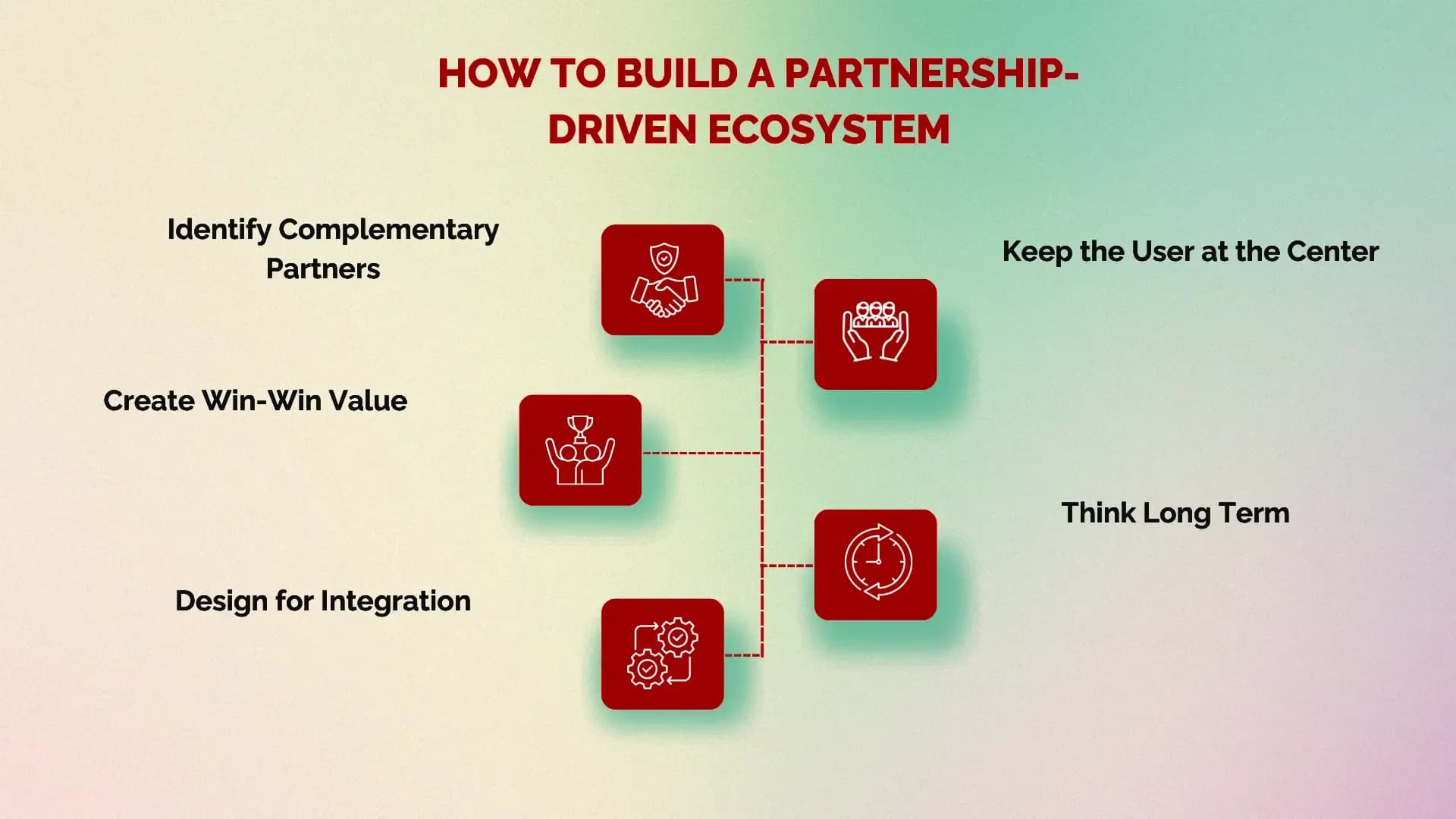
If you want to apply ecosystem thinking to your brand, start small but think big. Here’s how to get there:
1. Identify Complementary Partners
Look for partners who share your audience but solve different problems. A health app could partner with a wearable device brand, or a travel company could collaborate with payment providers to make bookings easier.
2. Create Win-Win Value
The best partnerships work because both sides gain something valuable. Ask what each partner brings to the table and how the end user benefits. Mutual value is the foundation of every strong partnership- each side must gain, and the user must benefit most.
3. Design for Integration
When developing products, design for integration - open APIs, plug-ins, and shared platforms make partnerships easier to form and maintain.
4. Keep the User at the Center
Every collaboration should make life simpler or better for the user. If it doesn’t, it’s not worth pursuing.
5. Think Long Term
Quick collaborations grab attention, but real ecosystems grow through time, trust and shared vision.
The Future Belongs to Collaborators
The next wave of innovation will come from brands that understand how to connect, not just compete. Whether it’s Apple combining tech and wellness, Microsoft merging AI with productivity, or Tesla linking vehicles to energy systems, the future belongs to companies that think beyond their own walls.
Ecosystem thinking is more than a strategy. It’s a way to future-proof your business by building meaningful, lasting partnerships that customers genuinely value.
So, the next time you plan your roadmap, ask yourself: “Do we need another product or do we need a partnership that makes everything we offer work better together?”
Because the real magic happens when your product stops standing alone and starts becoming part of something greater.
Let’s Build Your Next Partnership Together
At Seven Koncepts, we believe growth comes through collaboration. Whether you’re developing digital products or exploring new partnerships, we help you build ecosystems that connect, engage, and deliver value at every level. Let’s turn your next product idea into part of a bigger story.