
Motion branding isn’t a trend we’re approaching. It’s a shift we’re already living in.
Today, logos don’t just sit quietly on a screen. They load, pulse, morph, respond, and move. From app splash screens to social media reels, motion has become a powerful way for brands to express who they are, quickly and memorably.
As digital experiences continue to dominate how people interact with brands, motion branding has emerged as a natural evolution of visual identity. Static logos still matter, but motion logos take brand recognition to a whole new level.
Let’s talk about why logos that move are becoming essential, how brands are using them, and where motion branding fits into modern digital strategy.
The Rise of Animated Brand Identities
Not long ago, branding was built around fixed elements. A logo, a color palette, a typeface. These were built for print, signage, and early digital.
But the way we experience brands has changed.
We now interact with brands through:
- Websites and web apps
- Mobile apps
- Social media platforms
- Short-form video content
- Digital ads and micro-interactions
In these environments, motion feels natural.
Animated brand identities allow logos and visual systems to adapt to dynamic digital spaces. Instead of being static symbols, they become living elements that respond to context and platform.
That's why more brands are investing in motion as part of their visual identity. Motion adds depth, emotion, and flexibility without changing the core brand.
Motion as a New Form of Brand Recognition
Brand recognition has always been about memory. The faster people recognize you, the stronger your brand becomes.
Motion plays a huge role in this.
When a logo moves consistently and intentionally, it creates a visual pattern people start to associate with the brand. Over time, users don’t just recognize the logo. They recognize the way it moves.
Think about:
- A smooth reveal animation
- A subtle bounce or rotation
- A signature transition style
- A rhythmic loop used across platforms
These small details build familiarity.
Motion branding gives brands another layer of identity, one that works especially well in digital-first environments. It turns logos into experiences rather than symbols.
That's why motion branding is becoming a serious advantage for digital-first brands.
Think of how Netflix’s “ta-dum” reveal or Google’s playful dots animation becomes recognizable before you even read the name.
Why Motion Branding Works So Well in Digital Spaces
Motion is powerful because it mirrors how humans naturally perceive the world. Our eyes are drawn to movement. We notice it faster than static visuals.
In digital products, motion helps:
- Guide attention
- Explain interactions
- Reduce cognitive load
- Create emotional connection
From loading animations to hover effects, motion improves usability while reinforcing identity. This is where branding and UX start working together.
When done well, motion branding:
- Feels intuitive, not distracting
- Supports user experience instead of interrupting it
- Strengthens brand personality
At Seven Koncepts, we often see that brands that use motion well feel more polished, more confident, and more modern.
Modern Logo Trends: From Static to Dynamic
One of the biggest modern logo trends is flexibility.
Many brands no longer rely on a single, rigid logo. Instead, they create systems where the logo adapts based on context. Motion plays a key role in this shift.
Some common approaches include:
- Logos that animate on load or scroll
- Simplified logo marks for small screens
- Motion-only logo expressions for video content
- Responsive logo behavior across platforms
This approach aligns perfectly with digital brand identity. Brands today must look consistent everywhere while still feeling alive.
Motion allows logos to scale, simplify, and adapt without losing recognition.
Motion Design for Brands: More Than Just Animation
Motion branding is not about adding animation for the sake of it. It’s about strategy.
Good motion design for brands starts with questions like:
- What emotion should this brand convey?
- How fast or slow should movement feel?
- Should it feel fast and responsive, or slow and cinematic?
- Where does motion add value, not noise?
Motion should reflect brand personality just like color or typography does.
For example:
- A fintech brand may use smooth, controlled motion to convey trust
- A creative studio might use expressive, experimental animations
- A luxury brand may keep motion minimal and refined
When motion aligns with brand values, it strengthens identity instead of overpowering it.
Technical Tools Powering Motion Logos
Behind every smooth motion logo is a set of tools that make it work across platforms.
Some of the most commonly used tools include:
1. After Effects
Adobe After Effects is often used to design and prototype motion logos. It allows designers to explore timing, easing, and visual storytelling at a high level.
2. Lottie
Lottie has made motion branding far easier to implement in products. It allows animations created in After Effects to be exported as lightweight, scalable files that work seamlessly on:
- Websites
- Mobile apps
- Web apps
This makes motion branding practical, not just visually appealing.
With tools like Lottie, motion can stay lightweight and performant when built correctly. They become part of the product experience.
3. Figma (Smart Animate & Prototyping)
Figma is increasingly used in early-stage motion branding. With features like Smart Animate, designers can prototype transitions and micro-interactions directly within brand systems. This helps teams visualize motion behavior before moving into full animation tools.
Where to Use Motion Branding Effectively
Motion branding works best when used with intention. Not every element needs to move.
Some of the most effective places to use motion logos include:
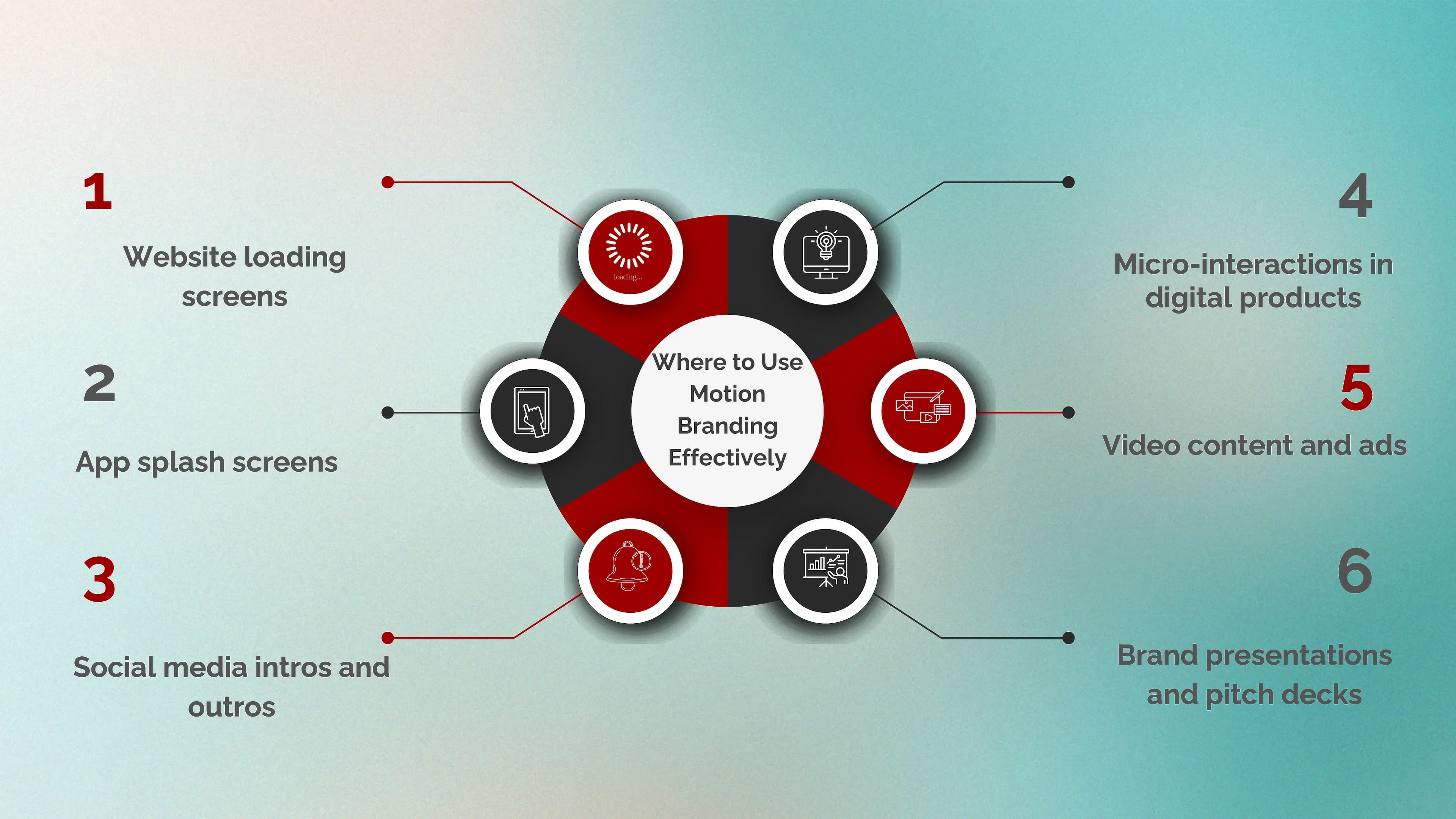
Used consistently, motion creates a recognizable rhythm across all brand touchpoints.
The key is restraint. Motion should feel purposeful, not overwhelming.
Motion Branding and the Future of Digital Brands
As digital experiences become more immersive, motion will play an even bigger role in branding.
We’re already seeing:
- Increased use of motion in UI design
- Brands designing motion guidelines alongside brand guidelines
- Logos designed with animation in mind from day one
Motion branding is becoming part of how brands communicate tone, emotion, and intent in digital environments.
For many digital-first brands, motion is no longer a nice-to-have. It’s part of staying relevant.
Conclusion: Logos That Move, Brands That Connect
Motion branding is not about replacing traditional branding. It’s about extending it. Logos that move feel human. They respond. They guide. They communicate personality in seconds.
When motion is used thoughtfully, it strengthens digital brand identity, improves interaction, and builds stronger emotional connections with users.
At Seven Koncepts, we treat motion branding like any other brand asset: it needs rules, consistency, and a job to do.
If you’re building a brand for today’s digital world, motion should be part of the conversation. If you’re building a brand for a digital-first world, motion should be part of the conversation. Seven Koncepts helps teams build motion identities that move, adapt, and stay consistent across product and marketing.
Let’s create a brand that doesn’t just look good, but feels alive. Get in touch with Seven Koncepts to explore motion branding for your brand.
If you want to learn more about motion branding, head to this blog: Micro-Interactions and Motion Design: Building Immersive Websites with WebGL and CSS Animations
FAQs
1. Is motion branding suitable for all businesses?
Yes, when done thoughtfully. The style and intensity of motion should match the brand’s personality and audience.
2. What tools are used to create motion logos?
Common tools include After Effects for design and Lottie for implementing animations across websites and apps.
3. How does motion branding improve digital brand identity?
Motion adds depth, consistency, and personality to digital brand identity, making brands more memorable and interactive.
4. What is motion branding?
Motion branding uses animation to express a brand’s identity through logos, transitions, and interface moments. Done well, it boosts recognition, guides attention, and makes digital experiences feel more premium.
5. What is a moving logo called?
A moving logo is commonly referred to as an animated logo or a motion logo. In branding, it’s part of a larger motion identity system where the logo animates consistently across different platforms.
These motion logos are often used in website loaders, app splash screens, videos, and social media content to strengthen brand recognition and create a more dynamic digital presence.