
Design consistency isn’t just about looking good. It’s about making smarter business decisions that quietly but powerfully pay off over time.
When we talk to clients, one thing comes up again and again: “We want better conversions, stronger branding, and more trust.” What many don’t realize is that one of the biggest drivers behind all three is often overlooked - design consistency. Not flashy redesigns or trendy visuals. Just clear, consistent UX and UI design across every touchpoint.
This is where the hidden ROI of design consistency lives.
What is Design Consistency?
Design consistency means maintaining a unified visual and functional language across all platforms. Your website, app, social media, ads, emails, dashboards- everything should feel like it belongs to the same brand.
This includes:
- Consistent colors and typography
- Repeated UI components (buttons, forms, layouts)
- Familiar navigation patterns
- A clear, recognizable brand identity design
- Aligned tone and visual hierarchy
When done right, users don’t need to think about how to interact with your product. It just feels natural.
And that’s exactly where good user interface design meets meaningful user experience.
The Meaning of “Hidden ROI”
ROI usually makes us think of numbers - sales, leads, revenue. But design consistency doesn’t always create instant spikes on a dashboard. Its impact is more subtle, long-term, and cumulative.
The return shows up as:
- Increased trust
- Better usability
- Higher engagement
- Lower drop-off rates
- Faster decision-making
- Stronger brand recall
These benefits don’t scream for attention but they compound over time. That’s why we call it hidden ROI.
How Design Consistency Drives Real Business Results
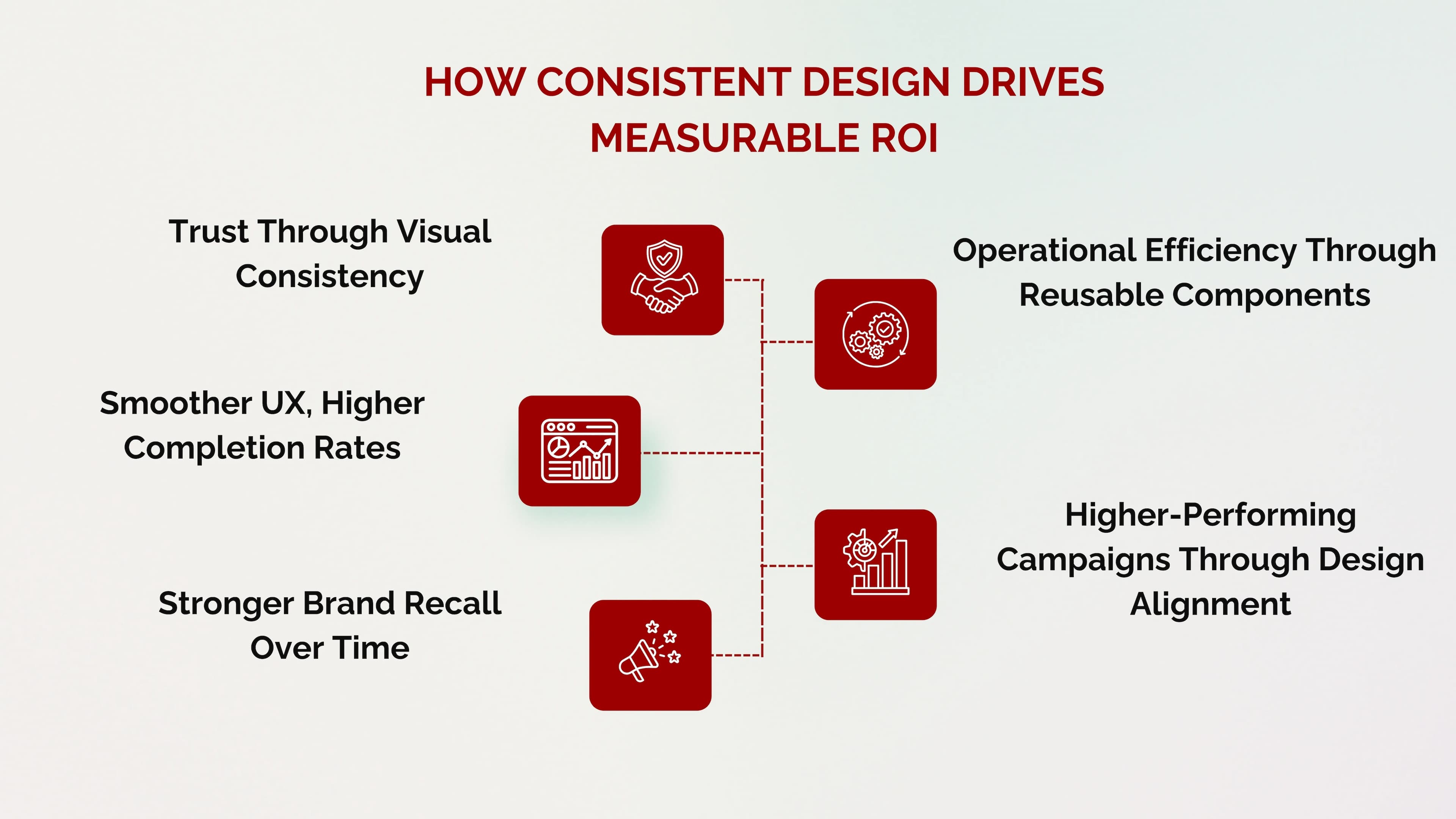
1. It Builds Trust Without Saying a Word
Users judge brands in seconds. If your design feels inconsistent or disjointed, it creates doubt even if your product is solid.
Consistent UX UI design signals professionalism, stability, and credibility. It tells users, “We know what we’re doing.”
When every interaction looks and feels familiar, users feel safer taking the next step, whether that’s signing up, purchasing, or reaching out.
The ROI here:
- Higher conversion rates
- Lower bounce rates
- Stronger first impressions
Trust is hard to measure, but easy to lose.
2. It Improves User Experience and Reduces Friction
Good user interface and user experience design removes friction. Consistency makes that possible.
When buttons behave the same way, layouts follow predictable patterns, and visual cues repeat, users don’t have to relearn how things work. This is a core principle of UX design.
As a UX agency, we’ve seen how even small inconsistencies can frustrate users and how fixing them can dramatically improve engagement.
The ROI here:
- Faster task completion
- Better usability
- More completed actions
Simply put: less confusion, more conversions.
3. It Strengthens Brand Recognition and Recall
Think about brands you instantly recognize, even without seeing the logo. That's not accidental. That's effective branding and identity design done right in action.
Consistent visuals, layouts, and design language help users remember you. Overtime, this builds brand equity, one of the most valuable (and expensive) assets a company can have.
Strong brand design means:
- Users recognize you faster
- Marketing feels more cohesive
- Your message lands more clearly
The ROI here:
- Reduced marketing effort
- Higher brand recall
- Stronger emotional connection
This is why top branding agencies obsess over consistency.
4. It Saves Time and Money Internally
Here’s a benefit many teams underestimate.
When you have a consistent design system:
- Designers work faster
- Developers reuse components
- Marketing teams create assets more efficiently
Instead of redesigning from scratch every time, teams rely on established patterns. Tools like Adobe Experience Design make consistency easier to maintain but only when a clear system exists.
The ROI here:
- Lower production costs
- Faster launches
- Fewer revisions
Consistency isn’t just good for users, it’s good for your team.
5. It Improves Marketing Performance
When your ads, landing pages, and website all follow the same design language, users experience continuity. There’s no mental disconnect between what they clicked and where they landed.
This alignment between UI and UX helps:
- Improve click-through rates
- Reduce drop-offs
- Increase trust during decision-making
Marketing works better when design works with it, not against it.
The Cost of Inconsistency
Now let’s flip the perspective.
When design lacks consistency, users experience:
- Confusion
- Distrust
- Frustration
- Decision fatigue
Inconsistent identity and brand designs sends mixed signals. It makes brands feel unreliable even if they aren’t.
The result?
- Lost leads
- Lower engagement
- Missed opportunities
And these losses often go unnoticed because they don’t show up as a single, obvious problem.
Design Consistency Is a Strategy, Not an Aesthetic Choice
This is where many businesses go wrong.
Design consistency is not about making everything “look the same.” It’s about creating a system that supports usability, brand identity, and growth.
At its core, great UX design is strategic. It aligns:
- Business goals
- User needs
- Visual communication
That’s why modern brand services go far beyond logos. They involve building scalable, consistent systems that grow with the business.
How We Approach Design Consistency
When we work with brands, we don’t chase trends. We focus on clarity, usability, and long-term impact.
Our process usually involves:
- Defining a strong brand foundation
- Creating clear UI UX experience guidelines
- Designing reusable components
- Ensuring consistency across digital touchpoints
This approach allows brands to grow without losing their identity and that’s where the real ROI begins.
Conclusion: The ROI That Keeps Paying Back
Design consistency doesn’t demand attention. It doesn’t announce itself. But it works quietly in the background - building trust, improving experience, and strengthening brands day after day.
If you want quick wins, you can chase trends. If you want sustainable growth, invest in consistency.
Because when design is done right, users don’t notice the design, they notice how easy everything feels.
Ready to Build a Consistent Brand Experience?
At Seven Koncepts, we believe great design is more than visuals, it’s a business advantage. Whether you’re refining your brand identity design, improving user interface design, or building a seamless UX / UI experience, we’re here to help you create systems that scale.
Let’s design experiences that don’t just look good but deliver real ROI.
Get in touch with Seven Koncepts today.
FAQs
1. Why is design consistency important for UX?
Design consistency helps users navigate products intuitively. Familiar patterns reduce confusion and improve the overall user experience, leading to better engagement and conversions.
2. How does design consistency impact brand identity?
Consistent visuals and interactions strengthen branding and identity design, making brands more recognizable and trustworthy over time.
3. Is design consistency only important for large brands?
Not at all. Startups and growing businesses benefit even more because consistency helps establish credibility early on.
4. How can businesses maintain design consistency?
By creating brand guidelines, design systems, and reusable UI components and regularly auditing all digital touchpoints.
5. Does consistent design really affect ROI?
Yes. While the ROI may not be immediate, consistent UX and UI design improves trust, usability, efficiency, and long-term brand value.