
Every click, scroll, and pause tells a story. As a social media marketing agency, we spend countless hours decoding human behavior; what makes people stop mid-scroll, why they click, and more importantly, what convinces them to buy. That’s where funnel psychology comes in. Understanding how people move from awareness to conversion is not just data science; it’s human science. It’s where emotion meets logic, turning attention into trust, and trust into action.
Let’s break down how you can use funnel psychology to guide your audience from casual browsers to loyal customers the same way we do it at Seven Koncepts.
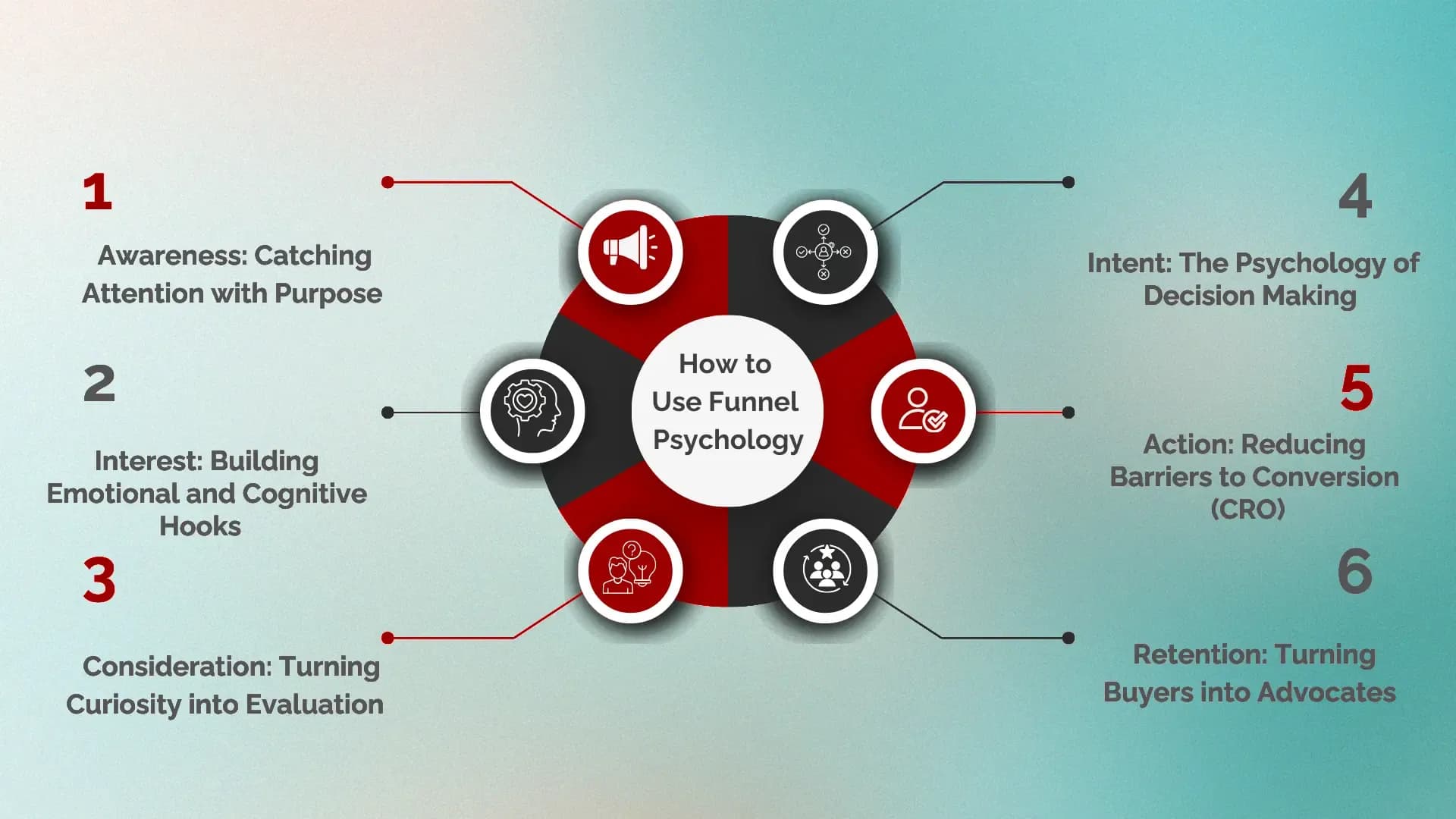
1. Awareness: Catching Attention with Purpose
The first stage of your marketing funnel isn’t about selling, it’s about being seen. You need to plant the seed of awareness in a crowded digital landscape.
Awareness grows fastest when you stop trying to sell too soon.
What works:
- Strong storytelling that resonates emotionally.
- Educational or entertaining content that naturally introduces your brand.
- Consistent posting across social channels to build familiarity.
This is where content marketing plays its biggest role. Humans trust familiarity. When they see your brand regularly providing value - tips, insights, humor, stories, they subconsciously start to trust you. This is the first psychological bridge toward conversion.
At Seven Koncepts, we use strategic content mapping to match our audience’s pain points with our solutions. The key insight? People remember how you made them feel long before they remember what you said.
2. Interest: Building Emotional and Cognitive Hooks
Once your audience knows you exist, the next step is sparking interest. This is where psychology truly drives performance.
At this stage, the mind asks one question: “Is this relevant to me?” Now your content must offer clarity and connection. We recommend combining emotion and logic — empathy draws attention, logic builds confidence.
Techniques to spark genuine interest:
- Social proof: Testimonials and case studies satisfy the brain’s need for validation.
- Visual cues: Use faces, contrast, and motion to draw attention in ads and posts.
- Reciprocity: Offer free resources or insights — people feel compelled to return the favor later.
In performance marketing, we often test ad variations not just for visuals, but for emotional tone. Often, a softer narrative - “We understand your struggle”- outperforms a hard sell. . That’s the psychological sweet spot.
3. Consideration: Turning Curiosity into Evaluation
By now, your audience is actively comparing you with others. This is the middle of the funnel where trust must evolve into confidence.
The key psychological play here is cognitive ease. When things feel simple, we assume they’re trustworthy. Complex navigation, unclear offers, or too many options create friction that kills momentum.
To optimize this stage:
- Streamline your landing pages.
- Use clean, easy-to-scan copy.
- Display your unique value proposition upfront.
- Guide visitors with micro-CTAs - small, clear next steps.
We often conduct conversion rate optimization audits here. It’s not just about aesthetics, it’s about psychological flow. Every scroll, headline, and button must lead the visitor seamlessly toward a decision. When the experience feels effortless, conversions follow naturally.
4. Intent: The Psychology of Decision Making
Now comes the tipping point; your potential customer is ready to act, but not fully committed. This is where the tiniest friction can undo all your effort.
Our brains rely on heuristics — mental shortcuts, to decide. The most influential ones here are:
- Scarcity: Limited-time offers signal high value.
- Authority: Featuring expert endorsements increases credibility.
- Social proof: Reviews reassure that others have made the same choice and benefited.
Use these triggers strategically, never manipulatively. True persuasion happens when your audience’s goals and your solution’s value meet.
5. Action: Reducing Barriers to Conversion
Even the most interested lead can back out if the process feels confusing or overwhelming. The goal here is frictionless conversion.
To make conversion effortless:
- Use clear, minimal forms — the fewer fields, the better.
- Offer multiple payment or contact options.
- Reassure users with visible trust symbols (SSL badges, guarantees, testimonials).
- Send confirmation or thank-you messages immediately — positive reinforcement seals satisfaction.
We often remind clients that design and copy must serve one purpose: clarity. At this stage, hesitation equals lost opportunity. The best marketing strategist knows that simplicity isn’t just design, it’s psychology in motion.
6. Retention: Turning Buyers into Advocates
Conversion isn’t the finish line, it’s the starting point of loyalty. People remember experiences, not transactions. To sustain growth, invest in post-purchase engagement.
Retention psychology revolves around gratitude and belonging. When customers feel valued, they stay.
Here’s what we recommend:
- Follow up with thank-you emails that add value, not clutter.
- Encourage feedback and respond personally.
- Reward repeat customers or referrals.
Retention ties back to your strategy — satisfied customers become your loudest marketers through word-of-mouth and reviews. Remember, the funnel doesn’t stop; it loops.
The Psychological Framework Behind Successful Funnels
Understanding funnel psychology means understanding humans. Here are the key psychological principles we build into every funnel at Seven Koncepts:
- Emotional Resonance: Make users feel seen before trying to sell.
- Cognitive Ease: Simplify decisions to build trust.
- Consistency: Repetition across channels reinforces memory and brand identity.
- Social Proof: People mirror others’ successful actions.
- Authority: Expertise reassures hesitant buyers.
- Reciprocity: Give before you ask.
- Commitment: Small yeses lead to big yeses like signing up for a newsletter before purchasing.
Every great marketing strategist knows that successful funnels don’t push, they pull. They guide rather than chase.
Applying Funnel Psychology in the Real World
Example: a new skincare launch campaign.
Here’s how funnel psychology would apply:
- Awareness: You run visually rich Instagram ads highlighting skin confidence stories.
- Interest: You post short videos explaining ingredient benefits — logical reinforcement.
- Consideration: You drive traffic to a simple landing page comparing your formula to competitors.
- Intent: You offer a limited-time trial bundle to encourage a decision.
- Action: A one-click checkout with visible security seals ensures no friction.
- Retention: Post-purchase emails share self-care tips and invite customer selfies.
This isn’t manipulation. It’s an empathy-driven design. It’s marketing that respects human decision-making.
Conclusion
At Seven Koncepts, marketing isn’t about chasing clicks, it’s about understanding people. Funnel psychology bridges that gap between attention and action, turning curiosity into commitment.
Ready to transform your marketing results? Let’s build a smarter, psychology-driven funnel together.
FAQs
1. What is funnel psychology in marketing?
Funnel psychology studies how people move through each stage of the buyer’s journey — from awareness to conversion, using insights from behavioral science and marketing principles.
2. Why does psychology matter in conversion rate optimization?
Because decisions start emotional before they turn logical. Understanding motivation, bias, and trust helps you create experiences that convert naturally.
3. How can content marketing support funnel psychology?
Content builds awareness and nurtures trust. When done strategically, it guides users step-by-step through the funnel with value-based communication.
4. What role does a marketing strategist play in this process?
A marketing strategist designs the funnel architecture — aligning messaging, visuals, and timing with audience behavior to improve performance marketing results.
5. Can applying funnel psychology improve social media marketing results?
Absolutely. Applying psychological triggers like storytelling, social proof, and authority in your social media marketing agency campaigns significantly enhances engagement and conversions.