
Emotional branding is about designing for feelings, not just function. It goes beyond logos, taglines, and color palettes. It focuses on how a brand makes people feel the moment they see it, interact with it, and experience it. In a crowded digital world where consumers scroll, compare, and deciding within seconds, emotional connection separates memorable brands from forgettable ones.
People rarely choose brands based on logic alone. Research in behavioral psychology consistently shows that emotions drive decision-making, often before rational thinking even begins. That means your visual identity, website design, tone of voice, and even micro-interactions are shaping perceptions long before someone reads your product description.
If you want loyalty instead of one-time purchases, engagement instead of passive scrolling, and advocacy instead of indifference, emotional branding needs to be part of your design strategy.
The Emotional Triggers Behind Visual Design
Every design decision triggers an emotional response, whether intentional or not. The brain processes visuals faster than text, meaning your brand’s emotional impression is formed almost instantly.
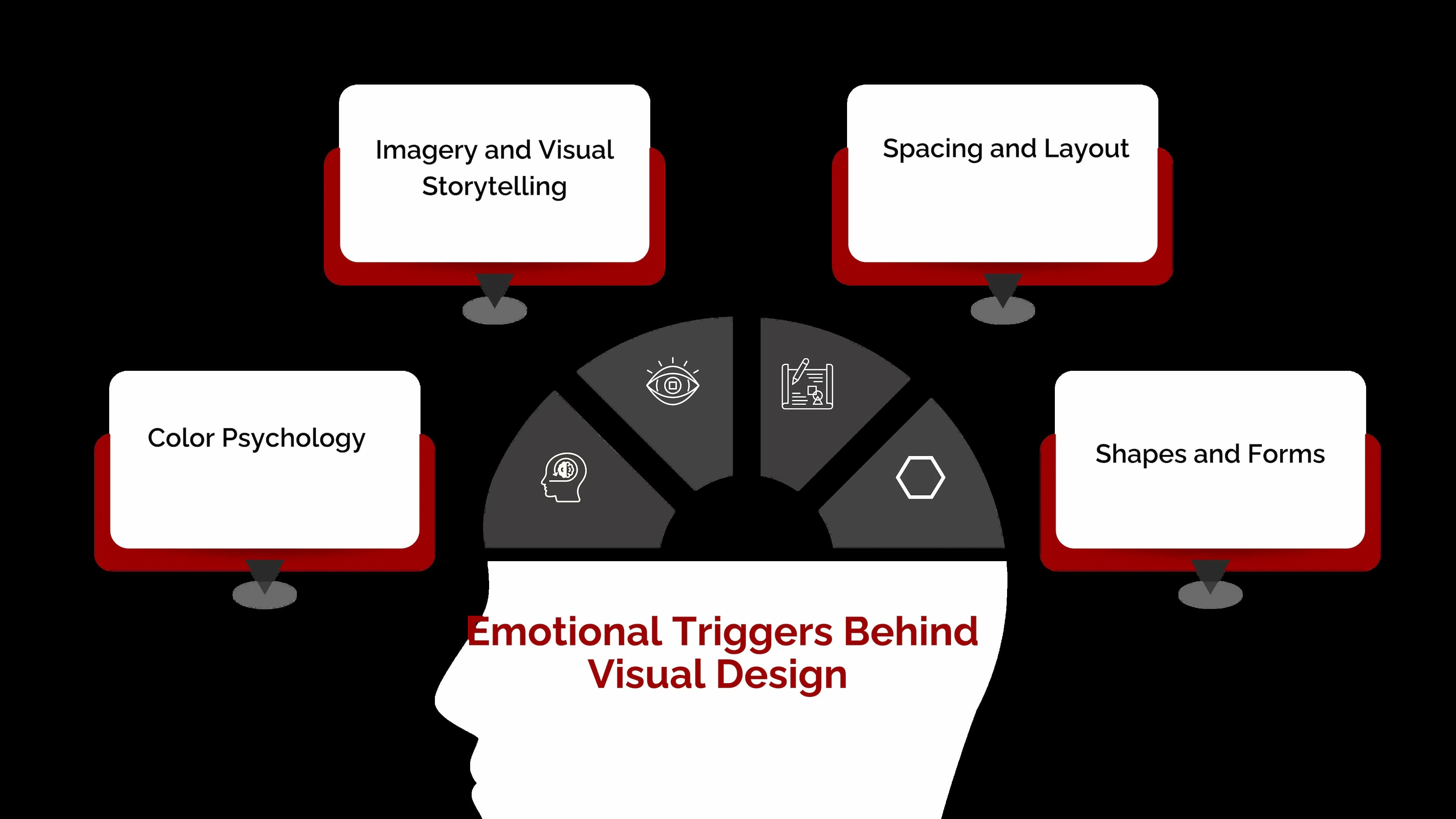
1. Color Psychology
Colors evoke specific emotional associations. Blue often communicates trust and reliability. Red can signal urgency or passion. Green suggests growth and calm. The emotional impact of color is not random. It is deeply tied to cultural and psychological conditioning.
2. Imagery and Visual Storytelling
Photography style, illustration tone, and visual themes influence how a brand is perceived. Warm, candid imagery can feel authentic and relatable. High-contrast, polished visuals may signal luxury and sophistication.
3. Spacing and Layout
Clean, open layouts communicate clarity and confidence. Overcrowded designs can create cognitive overload and subtle stress.
4. Shapes and Forms
Rounded shapes tend to feel friendly and approachable, while sharp angles can feel bold, dynamic, or even aggressive.
When brands intentionally align these elements with their desired emotional positioning, they create coherence. When they do not, they create confusion.
For example, a wellness brand that uses harsh typography and high-intensity color combinations may unintentionally communicate stress instead of calm. Emotional branding ensures that every visual cue reinforces the same feeling.
Building Brand Affinity Through Sensory Cues
Emotional branding is not only visual; It is sensory. Even in digital spaces, brands can engage multiple senses metaphorically and psychologically.
1. Sound
Think of the subtle chime when you complete a task in an app. That sound reinforces achievement and satisfaction. Audio branding can strengthen emotional memory.
2. Motion
Micro-animations, smooth transitions, and responsive feedback create a sense of flow and attentiveness. When motion feels intentional and fluid, users perceive the brand as thoughtful and modern.
3. Language tone
The way your brand speaks matters. Conversational language builds warmth and relatability. Formal language can signal authority and expertise. The emotional tone of copywriting directly affects trust and connection.
4. Consistency across touchpoints
Brand affinity grows when experiences feel cohesive and intentional. When your social media visuals, website design, email communication, and packaging align emotionally, the brand feels intentional and trustworthy.
Brand affinity is built through repetition of consistent emotional signals. Over time, these cues create familiarity. And familiarity builds trust.
Color, Tone, and Typography That Connect Emotionally
Let’s break down three core elements of emotional brand design and how they influence perception.
1. Color and Emotional Impact
Color is one of the strongest tools in emotional branding. It sets mood instantly. But it must align with brand positioning.
Consider how luxury brands often use black, deep neutrals, or muted palettes to signal sophistication and exclusivity. On the other hand, children’s brands frequently use bright, playful colors to signal energy and joy.
To use color strategically:
- Define the primary emotion your brand wants to evoke
- Select a dominant color that supports that emotion
- Use accent colors to guide attention and highlight action
- Maintain consistency across platforms
Color inconsistency weakens emotional association, whileconsistency strengthens memory.
2. Tone of Voice and Emotional Resonance
Your tone of voice is an extension of your brand personality. It shapes how your audience feels when reading your content.
A few tone variations and their emotional effects:
- Confident and direct language builds authority and trust
- Empathetic and supportive language builds comfort and relatability
- Playful and witty language builds friendliness and approachability
- Inspirational and bold language builds motivation and aspiration
Emotional branding requires clarity about who you are speaking to and how you want them to feel. A financial services brand targeting investors may use a composed and authoritative tone. A lifestyle startup targeting young creatives may adopt a relaxed and energetic voice.
3. Typography and Psychological Influence
Typography communicates more than readability. It carries emotional weight.
- Serif fonts often feel traditional, established, and credible
- Sans serif fonts feel modern, clean, and accessible
- Script fonts feel elegant or personal
- Bold typography feels strong and assertive
Typography hierarchy also affects emotional experience. Clear headings and structured layouts make users feel oriented and secure. Poor typographic structure creates friction and discomfort.
When color, tone, and typography work together, they create emotional alignment. That alignment builds trust.
Examples of Emotional Branding Done Right
Some of the most successful global brands excel because they design for emotion first and product second.
Coca-Cola and Personal Connection Through “Share a Coke”
Even globally recognized brands rely on emotional branding to remain relevant. Coca-Cola’s “Share a Coke” campaign is a strong example of how personalization can deepen emotional engagement.
Instead of displaying the Coca-Cola logo prominently on every bottle, the brand replaced it with common first names and relational phrases such as “Friend” or “Soulmate.” Suddenly, the product felt personal. Consumers were not just buying a beverage. They were searching for their name or someone they cared about.
This simple design shift transformed a routine purchase into a shared emotional experience. The campaign sparked excitement, social sharing, and gift-giving behavior. More importantly, it reinforced Coca-Cola’s long-standing association with joy, connection, and togetherness.
The brilliance of the campaign was not in complex design. It was in emotional relevance.
Dove and Emotional Authenticity in “Real Beauty”
Dove’s “Real Beauty” campaign demonstrates the power of emotional honesty in branding. Rather than promoting unrealistic beauty ideals, Dove challenged industry standards by celebrating natural beauty and diverse body types.
The campaign centered on real stories. It highlighted individuals who struggled with self-esteem and societal pressure, then showcased their journey toward confidence and self-acceptance.
This approach created deep emotional resonance. Many consumers saw themselves reflected in the messaging. The brand positioned itself not just as a skincare company, but as an advocate for self-worth and authenticity.
The emotional strategy strengthened brand loyalty because it aligned the product with a meaningful social message. Dove moved beyond features and benefits. It built a relationship based on shared values.
Google and Collective Emotion in “Year in Search”
Google’s annual “Year in Search” campaign takes a different emotional approach. Instead of focusing on one individual feeling, it taps into collective human experience.
Each year, Google releases a video that highlights the most searched topics, events, and questions from around the world. The campaign blends global milestones, cultural moments, and personal triumphs into a powerful narrative.
The result is reflective and often deeply moving. Viewers are reminded of shared struggles, victories, and hopes. Google positions itself not just as a search engine, but as a platform that connects humanity’s curiosity, resilience, and compassion.
This campaign demonstrates that emotional branding does not always need to sell directly to be effective. Sometimes, reinforcing shared identity and emotional memory is enough to strengthen brand perception.
Why Emotional Branding Drives Conversions
Academic research on emotional branding and consumer experience shows thatemotional brand experiences significantly influence consumer choice, purchase intention, and brand loyalty. Emotions play a central role in shaping how customers interpret brand meaning, perceive value, and make decisions in competitive markets.
Designing for feelings is not just about aesthetics. It has measurable business impact.
Emotionally connected customers are more likely to:
- Trust your brand
- Recommend your brand
- Choose your brand over competitors
- Forgive occasional mistakes
- Remain loyal long term
When users feel something positive during their interaction with your brand, they stay longer. When they stay longer, they explore more. When they explore more, they convert.
If your website looks visually appealing but struggles with engagement, the issue may not be usability alone. It may be an emotional disconnect.
Ask yourself:
- Does your visual identity reflect your brand values?
- Does your tone align with your target audience?
- Does your design create comfort, excitement, or confidence?
- Is the emotional experience consistent across platforms?
Emotional branding ensures that your digital experience is not just functional but meaningful.
Designing Emotional Experiences with Intention
To implement emotional branding effectively:
- Start with brand strategy, not aesthetics
- Define the emotional outcome you want users to feel
- Align visual design, messaging, and user experience around that emotion
- Audit every touchpoint for consistency
- Measure engagement metrics to refine emotional impact
Emotionally intelligent design requires empathy and a deep understanding of your audience’s fears, aspirations, motivations, and frustrations.
When brands design with empathy, users feel understood. And when users feel understood, they trust.
Conclusion
Emotional branding is about designing for feelings, not just functionality or aesthetics. It is the intersection of brand strategy, visual identity design, user experience, and storytelling. In a competitive digital landscape, emotion is your differentiator.
Color influences perception. Typography shapes credibility. Tone builds connection. Sensory cues reinforce memory. When all these elements align intentionally, brands move from being seen to being felt.
Brands that are felt are remembered. If you are ready to move beyond surface-level design and build a brand experience that connects emotionally and converts strategically, Seven Koncepts can help. We design emotionally intelligent brand identities and digital experiences that create trust, build affinity, and drive real business growth.
Let’s design something people don’t just see but truly feel.