
Color psychology isn’t a “nice-to-have” anymore. In 2026, it’s still one of the most powerful tools in digital marketing, quietly influencing how people feel, think, and ultimately buy. Scroll behavior is faster, attention spans are shorter, and competition is brutal but colors still manage to stop thumbs, shape perceptions, and drive decisions. Whether we’re building a landing page, running ads, or working on full-scale brand identity design, color continues to do heavy lifting behind the scenes.
So the real question isn’t does color psychology work, it’s how we use it strategically in today’s digital-first world.
How the Digital Context has Changed
At its core, color psychology is about emotional and psychological responses. Humans still associate red with urgency, blue with trust, green with growth, and black with luxury. That hasn’t changed in decades.
What has changed is the environment.
In 2026, people are:
- Consuming content across multiple screens
- Making buying decisions faster than ever
- Judging brands within seconds
This makes color more important, not less.
When users land on a website or see an ad, they don’t read first, they feel first. And that feeling is largely driven by color. In digital marketing, we’re often fighting for 3–5 seconds of attention. Color helps us win (or lose) that battle instantly.
First Impressions: Color Speaks Before Words
Studies consistently show that people form an opinion about a brand within 90 seconds and a huge portion of that judgment is based on color alone. In digital brand marketing, this is critical.
Before users read your copy or understand your offer, they subconsciously ask:
- Does this brand feel trustworthy?
- Is this modern or outdated?
- Is this for “people like me”?
Color answers these questions faster than text ever could.
That’s why brand identity design isn’t just about picking “nice-looking” colors. It’s about aligning emotion, audience psychology, and business goals into a visual language that works across platforms.
How Colors Impact Buying Decisions in 2026
 Let’s talk about money because that’s where color psychology really proves its value.
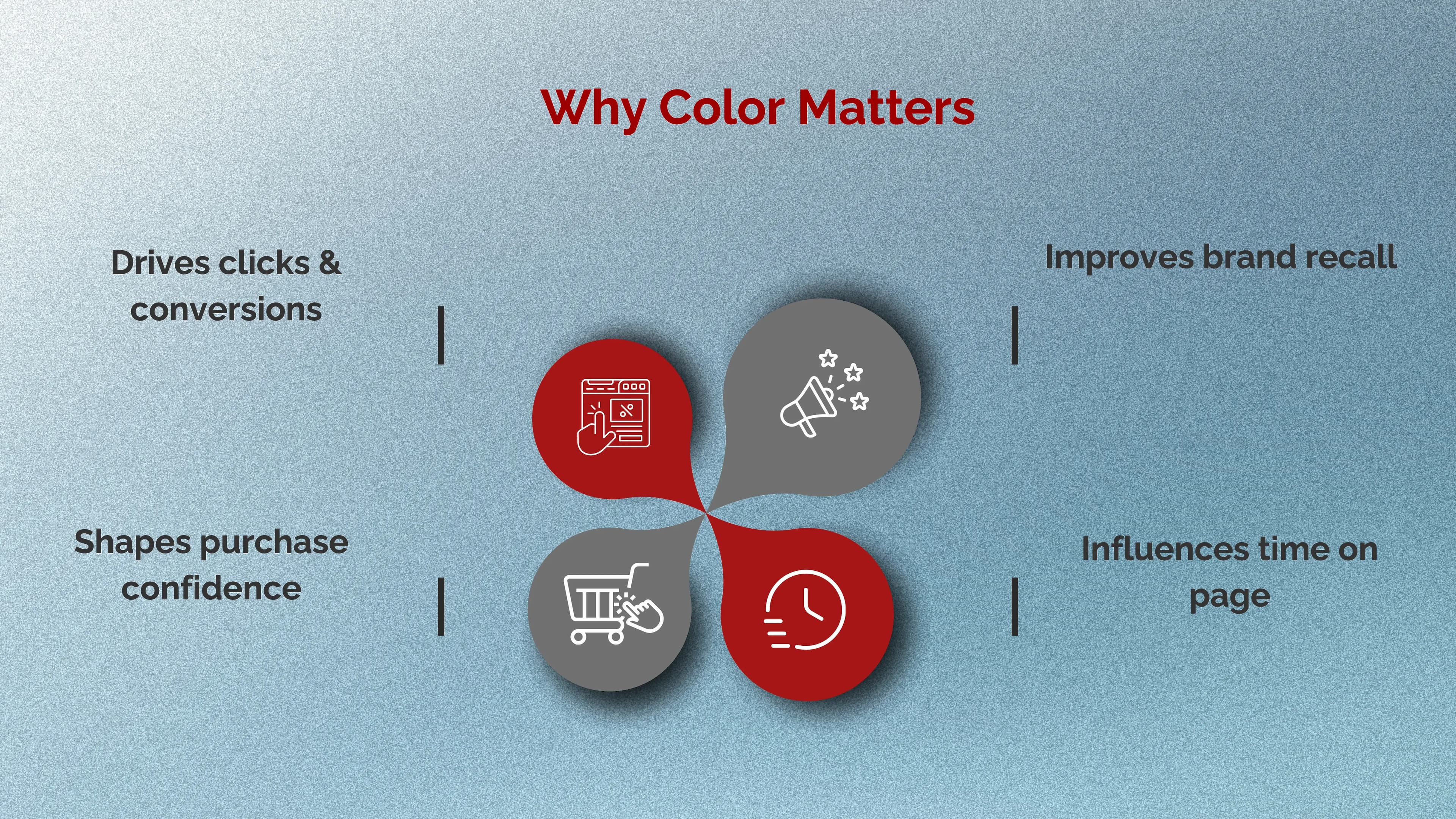
In digital marketing, colors influence:
- Click-through rates (CTRs)
- Conversion rates
- Time spent on page
- Brand recall
- Purchase confidence
Here’s how some core colors still impact buying behavior today:
1. Red: Urgency & Action
Red triggers excitement and urgency. In 2026, we still see it used effectively in:
- Limited-time offers
- Clearance sales
- “Buy Now” or “Last Chance” CTAs
But overuse can feel aggressive, especially to Gen Z audiences who value authenticity.
2. Blue: Trust & Reliability
Blue remains a favorite in tech, finance, and SaaS. It communicates:
- Security
- Stability
- Professionalism
That’s why so many global brands rely on it for long-term brand awareness and credibility.
3. Green: Growth & Balance
Green is no longer just about “eco-friendly.” In 2026, it also signals:
- Wellness
- Financial growth
- Calm decision-making
It’s powerful for brands focused on sustainability, health, or long-term value.
4. Black: Authority & Luxury
Minimalist black-and-white branding has exploded in recent years. Black conveys:
- Premium quality
- Confidence
- Exclusivity
When paired with strong typography, it’s a favorite in identity design branding for high-end brands.
Color Psychology in Performance Marketing
In paid ads and funnels, color choices directly affect performance metrics. We’ve seen firsthand how small changes like adjusting a CTA button color can increase conversions without changing a single word.
In 2026, smart brand marketing strategy includes:
- A/B testing colors in ads
- Matching CTA colors with emotional intent
- Ensuring color contrast for accessibility and clarity
For example:
- A green CTA might work better for “Get Started”
- A red CTA might outperform for “Limited Offer”
- A blue CTA might win for “Learn More”
Color guides user behavior. When used intentionally, it reduces friction and increases confidence.
Brand Identity Design: Consistency Is the Real Power
One of the biggest mistakes brands still make is inconsistency. Using different colors across platforms weakens brand recognition and trust.
Strong brand identity design ensures that:
- Website colors align with social media visuals
- Ads feel instantly recognizable
- Users build familiarity over time
In digital marketing, familiarity = trust. And trust = sales.
This is why top branding agencies obsess over color systems and not just logos. A proper color palette includes:
- Primary brand colors
- Secondary and accent colors
- Guidelines for usage across digital touchpoints
This consistency is what turns a business into a brand.
Cultural Shifts and Color in 2026
Color psychology isn’t universal anymore, it’s contextual.
In 2026, we must consider:
- Cultural differences in global campaigns
- Dark mode vs light mode experiences
- Accessibility for color-blind users
Modern identity design branding adapts. It’s flexible, inclusive, and user-centered. Brands that ignore this risk alienating audiences no matter how good their product is.
Color Builds Brand Awareness (Even When You’re Not Selling)
Not every interaction leads to a purchase and that’s okay.
Color plays a massive role in long-term brand awareness. When people repeatedly see the same color palette:
- They remember the brand faster
- They recognize it without logos
- They feel familiarity even before engagement
Think about how certain colors instantly remind you of specific brands. That’s not accidental, that’s strategic brand marketing.
A strong example of color psychology done right is Coca-Cola. Coca-Cola’s iconic red isn’t just a design choice, it’s a psychological trigger. Red evokes excitement, urgency, and emotion, which perfectly aligns with impulse buying and social consumption. In digital campaigns, that red instantly grabs attention in crowded feeds and reinforces brand awareness without the need for heavy messaging. Even when users scroll past an ad, the color alone reinforces recognition, proving how powerful consistent brand identity design can be.
Why Top Branding Agencies Still Lead With Color
There’s a reason top branding agencies start with color before copy or campaigns. They understand that color:
- Sets emotional direction
- Defines brand personality
- Shapes customer expectations
In 2026, branding isn’t about being loud, it’s about being clear. And color clarity is often the difference between brands that scale and brands that blend in.
The Human Side of Color Psychology
At the end of the day, color psychology works because humans haven’t changed. We still feel before we think. We still associate colors with memories, emotions, and experiences.
As digital marketers, our job isn’t to manipulate, it’s to communicate better.
When we use color intentionally:
- We reduce decision fatigue
- We guide users naturally
- We create experiences that feel right
Conclusion
Color psychology isn’t outdated, it’s evolving.
In a world of AI-generated content and endless digital noise, brands that understand human emotion will always win. Color remains one of the most subtle yet powerful tools we have to shape perception, influence behavior, and build meaningful connections.
If we want our brands to stand out, feel authentic, and convert consistently, we can’t ignore the psychology behind what people see first.
Ready to Build a Brand That Feels Right?
At Seven Koncepts, we don’t just design brands, we design experiences. From brand identity design to full-scale brand marketing strategy, we help businesses use color, storytelling, and strategy to stand out in crowded digital spaces.
Let’s build a brand that connects, converts, and lasts.
FAQs
1. Does color psychology really affect buying decisions in 2026?
Yes. Even with advanced technology, human psychology hasn’t changed. Color still plays a major role in trust, emotion, and decision-making.
2. How important is color in brand identity design?
Extremely important. Color is one of the most recognizable elements of a brand and directly impacts brand awareness and consistency.
3. Should startups invest in professional identity design branding?
Absolutely. Early-stage branding sets perception. A strong visual identity helps startups compete with established brands.
4. Can changing colors really improve conversions?
Yes. Even small adjustments to CTA or layout colors can significantly impact click-through and conversion rates.
5. How do top branding agencies choose brand colors?
They combine psychology, audience research, industry positioning, and long-term scalability, not personal preference.