
In the fast-paced business world, scalability is the key to survival and growth. But scalability isn’t just about processes and infrastructure, it also requires brand systems that can grow with your company. Branding and brand identity are often the first areas where businesses hit friction as they try to scale. As companies expand, maintaining a consistent and recognizable brand becomes increasingly challenging. The solution? Building brand systems that are designed to scale seamlessly across all touchpoints and platforms.
At Seven Koncepts, we understand the importance of creating scalable branding systems. A strong, adaptable brand identity design ensures your brand can evolve and evolve, and stand the test of time whether you’re entering new markets or launching new products.
In this blog, we’ll explore how to build brand systems that can scale with your business, ensuring that your brand remains consistent, recognizable, and impactful at every stage of your journey.
Why Building Scalable Brand Systems Matters
Before diving into how to build scalable brand systems, it’s important to understand why they matter.
As your company grows, your branding efforts need to be just as flexible and adaptable. The last thing you want is for your brand to feel disjointed or out of place when it enters new markets, launches new products, or expands across different channels. A brand system is essentially a toolkit that helps you manage your brand’s identity in a way that’s consistent, scalable, and easy to execute.
The Challenges of Scaling a Brand
Here are some challenges businesses face when scaling their brand:
- Inconsistent Brand Identity: As teams grow and markets expand, it’s easy for brand messaging, visuals, and overall identity to become inconsistent.
- Increased Complexity: More products, services, and touchpoints can lead to confusion if the brand isn’t clearly defined and organized.
- Cultural and Market Differences: Expanding into different regions can present unique challenges in maintaining a unified brand experience while adapting to local preferences.
Building a brand system that scales is about creating a framework that supports growth, provides clear guidelines, and ensures consistency across all touchpoints.
Here’s how to build brand systems that scale.
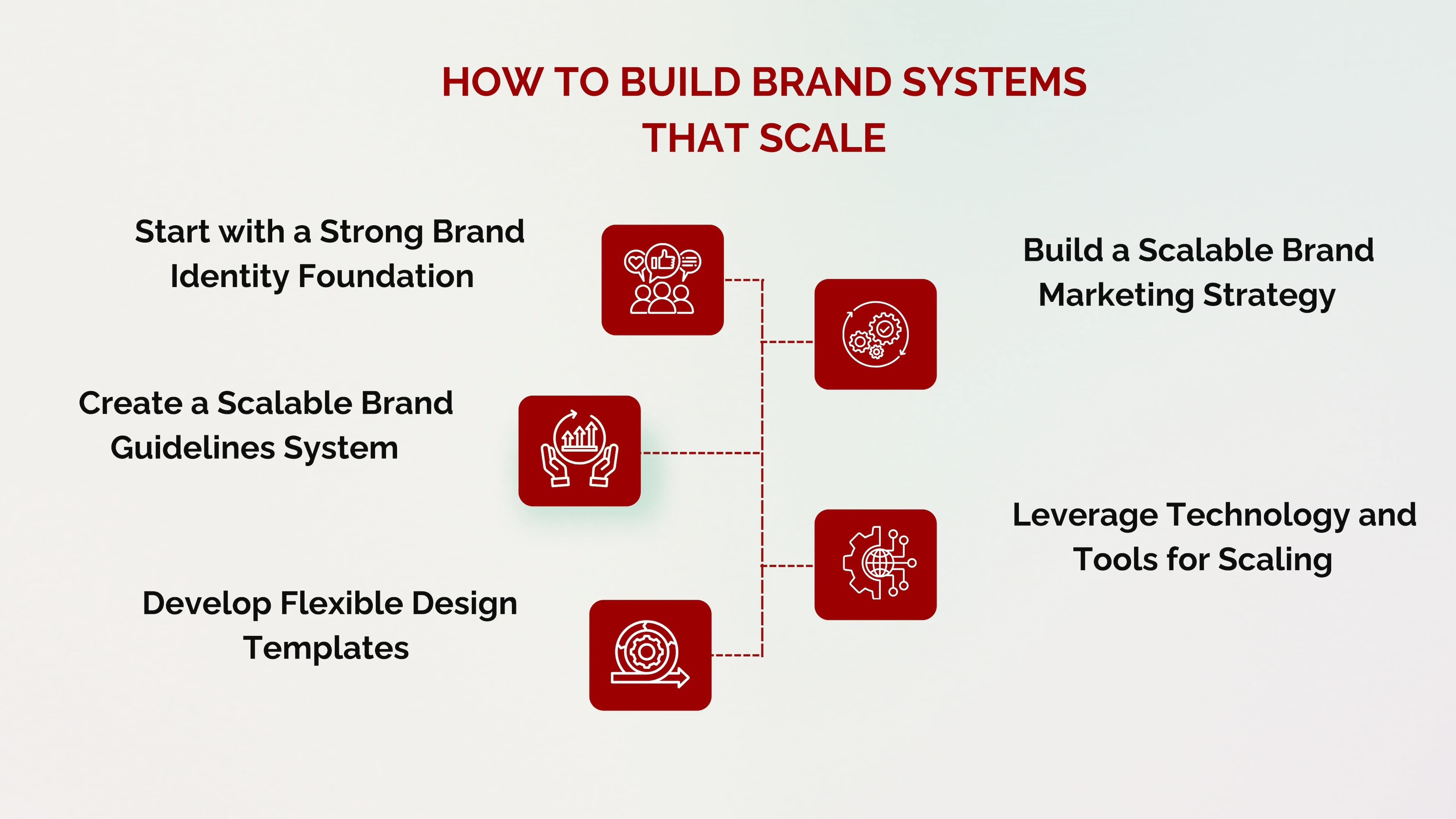
1. Start with a Strong Brand Identity Foundation
The first step in creating scalable brand systems is having a solid brand identity. Without a clear brand identity design, scaling becomes difficult because there’s no cohesive visual or emotional thread that ties everything together.
A brand identity system includes:
- Logo design: A recognizable logo that stands the test of time.
- Color palette: A set of colors that reflects your brand’s personality and can be used consistently.
- Typography: Fonts that are versatile and align with your brand tone.
- Voice and tone: How your brand communicates, whether formal, friendly, or authoritative.
When your brand identity is well-defined, it serves as the backbone of your scalable brand system. This identity should be adaptable but never lose its core essence.
Example: Starbucks
Starbucks is a strong example of brand identity design built for scale.
From its iconic green logo to the tone of its marketing, everything about Starbucks’ brand is consistent. The company has adapted to different cultures and regions by tweaking elements like store layouts and seasonal menus, but the core brand identity remains the same. Whether you’re in New York or Tokyo, the experience feels familiar, thanks to their strong brand identity.
2. Create a Scalable Brand Guidelines System
Once you’ve established your brand identity design, it’s time to build a set of brand guidelines that can be used across different teams and markets. These guidelines should clearly define how your brand elements - logo, colors, fonts, voice should be used in various contexts.
A well-structured brand guidelines document should include:
- Logo usage: Clear instructions on how your logo can and can’t be used.
- Color specifications: Exact color codes (Pantone, RGB, Hex) to ensure consistency across digital and print.
- Typography: Fonts to use in different contexts, such as headlines, body copy, and call-to-actions.
- Photography style: Guidelines for choosing and editing images to ensure they align with your brand’s aesthetic.
By creating these guidelines, you ensure that your brand can be applied consistently, no matter how large your company grows or how many teams are working on different parts of your business.
Example: Google
Google’s brand guidelines are a prime example of a scalable system. From the Google logo to the color palette and typography, the guidelines are clear and comprehensive. Whether it’s a small app icon or a massive billboard, Google’s brand remains instantly recognizable. This consistency across various platforms and touchpoints is a direct result of their detailed brand system.
3. Develop Flexible Design Templates
One of the biggest challenges of scaling a brand is managing design across multiple teams and departments. With identity design branding, flexibility is key. While consistency is essential, your brand should also be adaptable to different use cases.
Developing flexible design templates allows your team to maintain brand consistency without being bogged down by custom design work every time. For example:
- Email templates: Ensure your email marketing is visually aligned with your brand identity.
- Social media templates: Create templates that maintain your brand’s voice and visual style, regardless of who is posting.
- Presentation templates: Provide teams with branded PowerPoint or Google Slide templates to ensure all internal and external communications stay on brand.
Example: HubSpot
HubSpot is a great example of a company that uses flexible design templates to maintain its brand identity while scaling. Their marketing team has access to a variety of templates that ensure every email, landing page, and social media post feels consistent and on-brand, no matter who is creating the content.
4. Build a Scalable Brand Marketing Strategy
Brand marketing is at the heart of every business strategy, but as your company grows, so too should your approach to brand marketing. A scalable brand marketing strategy allows you to reach new audiences, enter new markets, and adapt to different platforms without losing your brand’s essence.
Consider the following when developing a scalable brand marketing strategy:
- Content consistency: Make sure your messaging is aligned with your brand’s values and tone across all marketing channels.
- Adaptability: As you scale, your marketing campaigns should be able to adapt to different markets and customer segments.
- Cross-platform integration: Ensure your marketing strategy is flexible enough to work across online and offline channels.
Example: Nike
Nike’s brand marketing strategy is a textbook example of how to scale a brand while maintaining consistency. Their iconic “Just Do It” slogan, paired with motivational messaging, transcends product categories and markets. Whether it’s an athlete promoting a new shoe or a social campaign advocating for inclusivity, Nike’s marketing stays true to its core values, making it adaptable yet consistent.
5. Leverage Technology and Tools for Scaling
In today’s digital world, there are numerous tools and technologies that can help you scale your brand systems effectively. Tools like Adobe Experience Design and brand asset management systems help maintain consistentcy, streamline workflows, and manage brand assets across channels.
By integrating technology into your branding processes, you can ensure that your brand remains consistent and scalable, no matter how large your company becomes.
How Seven Koncepts Can Help Build Scalable Brand Systems
At Seven Koncepts, we specialize in building brand systems that are not only visually compelling but also strategically aligned with your business goals. We understand the challenges of scaling a brand and can help you develop a brand identity design that grows with your business. Our services include:
- Brand Identity Design: Crafting a solid foundation for your brand’s visual and emotional identity.
- Brand Guidelines: Developing clear and comprehensive guidelines to ensure consistency across all touchpoints.
- Brand Marketing Strategy: Creating scalable marketing strategies that can evolve with your business.
We work with businesses to ensure that their branding systems can scale efficiently, maintaining consistency and flexibility as they grow.
Ready to Build a Scalable Brand?
If you’re ready to create a brand system that will grow with your business, Seven Koncepts is here to help. From brand identity design to brand marketing, we have the expertise to build systems that scale with your needs.
Contact us today to start building a brand system that supports long-term growth and success!
FAQs
1. What is a brand system?
A brand system is a set of guidelines, assets, and templates that ensure your brand’s identity is consistent and scalable across all channels and touchpoints.
2. Why is scalable branding important?
Scalable branding ensures that your brand remains consistent, recognizable, and adaptable as your business grows. It helps maintain brand integrity while reaching new audiences and markets.
3. How do I create a brand system?
To create a scalable brand system, start with a clear brand identity design, develop detailed brand guidelines, create flexible design templates, and build a strategic marketing plan that can adapt to growth.